
Before assuming office as Nigeria’s President in 2023, Bola Ahmed Tinubu, was very clear about his intention to give the country’s youths a pride of place in his government and a better deal society. He promised to appoint young Nigerians to ministerial positions and specifically announced the reservation of three cabinet slots for individuals under 40 years and six more for those under 50, approximately 10% of the average Nigerian cabinet size which hovers around 30 members.
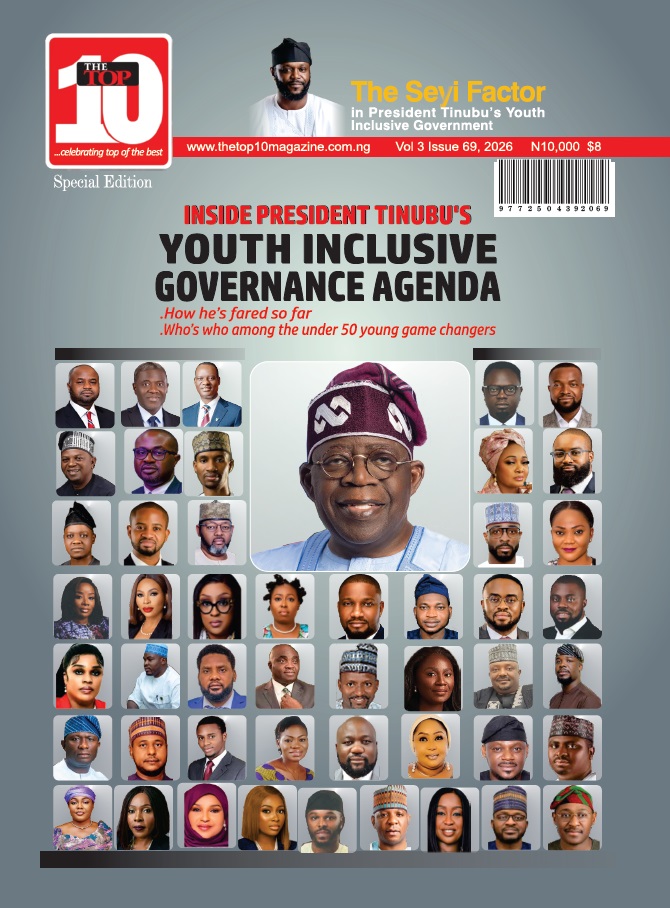
Naturally, Nigerian youths became excited. First, because this high proportion is unprecedented. Secondly, it would align Nigeria with international best practices where youths are increasingly dominating governments. The excitement also stemmed from the novelty in the courage of an aged incoming President pledging to challenge the existing order – an order dominated by recycled old politicians; an order in which youths were either completely excluded from cabinet or in which the appointment of an odd youth here and there into ministerial positions felt like an afterthought. The President’s open declaration to change the order in favour of those at the opposite end of his own generation could not but raise hope for youth inclusive governance and better deal and future for Nigerian youths.
Almost three years into his four-year term, how has President Tinubu fared on his agenda for a youth-inclusive governance? How does reality compare to promise? To what extent has performance matched expectations? On the strength of available evidence, the President’s scorecard on this item reads: commendable.
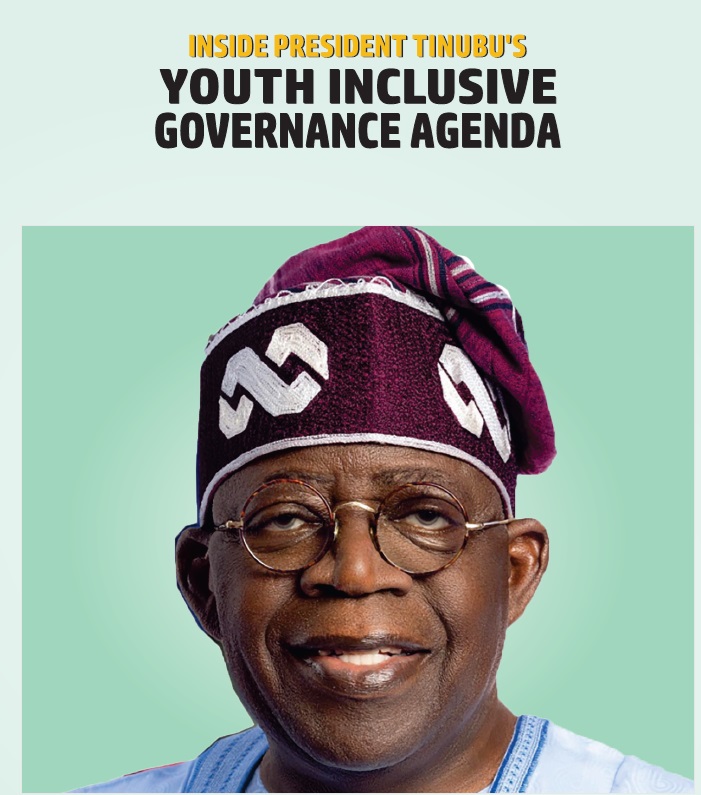
The Nigerian Youth Policy document expired about a year before Tinubu became President while a new one is not in place yet. Thus, there is no official document providing the framework for the formulation, implementation and assessment of youth policies and programmes of this administration. This leaves the analyst with the options of using international standards (best practices, peer review, trends), the country’s governance antecedents or the President’s own promises as benchmarks for assessing his administration on youth inclusivity.
International standards (best practices, peer review, trends) for youth inclusion in governance emphasizes moving beyond tokenistic participation toward meaningful youth engagement, where young people are recognized as equal partners in decision-making. These standards, heavily influenced by the UN Sustainable Development Goals (SDGs), the OECD, and the Commonwealth, require that youth have direct, sustained input into policy formulation and implementation.
The use of governance antecedence as benchmark is hardly practicable in Nigeria because relevant data are either unavailable or unreliable. Thus, the only relevant benchmarks to assess the performance of the Tinubu administration’s performance on youth inclusivity are international standards and his youth development policies as encapsulated in his governance blueprint called The Renewed Hope Agenda. It promised to empower young Nigerians through active political participation, economic empowerment, and skills development. Key strategies include appointing young leaders, fostering digital economy opportunities, and ensuring youth involvement in decision-making at all levels to transform Nigeria.
Assessed by both benchmarks, President Tinubu has performed creditably well in youth development and inclusion in governance. He has stepped up from the tokenism of the past and designed deliberate, comprehensive and impactful youth-based policies and programmes that are being implemented by his administration.
Youth development and empowerment programmes
The Ministry of Youth Development is implementing a 2-Year Strategic Roadmap focusing on skills development, job creation, and supporting youth-led businesses, student education funding, vocational training, and digital innovation. Key initiatives include the National Education Loan Fund (NELFUND), 3 million Technical Talent (3MTT), and the $617 million iDICEprogramme for startups. The 3MTT) programme aims to train three million people in digital skills. The National Education Loan Fund (NELFUND) serves over 788,000 students, with additional investments in vocational and apprenticeship training, while the $617 million iDICE initiative, bolstered by the Bank of Industry (BOI), supports youth-led digital and creative ventures. The government has also created the Nigerian Youth Academy (NiYA), a learning platform aimed at providing digital skills to seven million youths, with a target to create five million jobs, and the Labour Employment and Empowerment Programme (LEEP).
These initiatives have started to significantly impact the lives of Nigerian youth positively. Take NELFUND, for instance. As of early 2026, it had disbursied over ₦206 billion to more than 1.16 million students across 270 institutions within 23 months. The initiative provides essential tuition fees and upkeep allowances to indigent students. Rotimi Olawale, Executive Director of Youthhub Africa, attests to the impact of NELFUND: “We’ve seen fewer students resorting to crowdfunding for school fees since the loan programme was launched,” he said. “If properly managed, this could be a game-changer.”
On its part, the 3MTT programme has, within its first year, trained over 91,000 fellows (Cohorts 1 & 2), boasting 48% female participation, and facilitated thousands of job placements. It has activated over 180 learning clusters across the 36 states of the Federation and the FCT, covering key tech skills like AI, Data Science, and Software Development. Olawale said that, although 3MTT is still in its infancy, the initiative has the potential to address both youth unemployment and Nigeria’s growing demand for tech talent.

The Investment in Digital and Creative Enterprises (iDICE) programme, as of April 2026 had secured $617 Million in Funding: The program has finalized over $600 million in funding to support startups in technology, gaming, and creative industries. The initiative launched the iDICE Startup Bridge, providing structured training and mentorship to young entrepreneurs, including a 12-week Founders Lab for idea-stage founders. It has announced up to ₦10 million in grants for top performers in its training tracks.
The Nigeria Youth Academy (NiYA), launched in 2025, has also achieved significant milestones in empowering young Nigerians through digital, technical, and vocational skills training aimed at fostering entrepreneurship. In December 2025, it launched the NiYA Gigs platform, training thousands in high-demand skills, and awarding over ₦100 million in startup grants to youth-led ventures. The academy offers over 58 courses in three categories—Technical, Soft Skills, and General Knowledge—focusing on bridging the unemployment gap through marketable skills. The 2nd edition of the NiYA Startup Grants Awards supports over 200 youth-led startups, providing ₦1 million each, along with ₦500,000 to over 100 individuals in the informal sector.
LEEP, launched on April 15, 2025, is another initiative of the Tinubu administration that aims to create 2.5 million jobs in two years, specifically targeting youth and women with high-demand skills. It focuses on enhancing employment through a digital academy, modernized training centers, and job matching services. LEEP’s Digital Academy provides training in high-demand fields such as software development, data analysis, artificial intelligence, and digital marketing to create a tech-savvy workforce. The programme is upgrading existing facilities into modern hubs to provide training in specialized skills like solar panel installation and greenhouse.
Youth in Governance and Politics
Before assumption of office, President Tinubu did not mince words about his intention to widen the space for youth participation in his government. “Reserve at least three cabinet positions for persons under the age of 40 and six more positions for members under the age of 50,” he said. His administration targeted 30% youth representation overall. However, the initial ministerial list fell short of promise and expectation as only two nominees were under 40, while seven fell under the 50-year threshold. Concerns were raised resulting in advocacy efforts by civil society organizations spearheaded by Advokc Foundation. These efforts paid off when additional young ministers, including Dr. Jamila Bio Ibrahim (37) and Ayodele Olawande (34), were appointed, bringing the number to the 10, one more than promised. Outside the cabinet, the President has even been more generous with the appointment of youths. At the last count, the President has appointed over 50 heads of Ministries, Departments and Agencies (MDAs), old and new, who are below the age of 50 (See details in Tinubu’s youth appointees: Profile Highlights).
The President has explained the youth-centric policy of his administration. He regards them, not merely as beneficiaries of government programmes but active partners in nation-building, the cornerstone of national development, peace-building, and inclusive growth.
So far, the President’s appointees have justified the confidence reposed in them as indicated by the significant value they are adding to policy and programme formulation and implementation at their various posts. Just to mention a few examples: The digital transformation and innovation programme being implemented through the 3 Million Technical Talent (3MTT) initiative is the brainchild of the 48-year-old Minister of Communication, Innovation & Digital Economy, Dr. ‘Bosun Tijani. He has bridged the gap between the administration and tech-savvy youth by implementing technology-driven policies aimed at boosting the digital economy. Another young cabinet member, Hon. Olubunmi Tunji-Ojo, the Minister of Interior, has significantly tackled the long-standing passport backlog, clearing over 200,000 pending applications within weeks of taking office, improving efficiency and service delivery. He has also spearheaded the initiative to allow personal uploads of passport photographs via the immigration portal, reducing physical visits and streamlining the application process.
Charles Odii, the Director General/CEO of SMEDAN, who is below 50, has launched specialized grants, loans, and capacity-building programmes to support over 100,000 new SMEs, promoting youth-led ventures, while Khalil Halilu, 35, the Executive Vice-Chairman/CEO of NASENI has focused on industrialization through the development of local technology and engineering infrastructure, enhancing Nigeria’s capacity in manufacturing. Bamanga Usman Jada, 43, Managing Director/Chief Executive of the Oil and Gas Free Zones Authority (OGFZA), is leading reforms to attract foreign investment into the oil and gas sector. There are many more youths in the Tinubu administration who are also proving their mettle.
On the whole, it can be said that President Tinubu has, in the first half of his 4-year term, aligned performance with promise and expectations in the sphere of youth inclusivity. It remains to be seen if he can exceed his own benchmarks or expectations in the second lap of his first term.
The Seyi Factor In President Tinubu’s Youth Inclusive Government
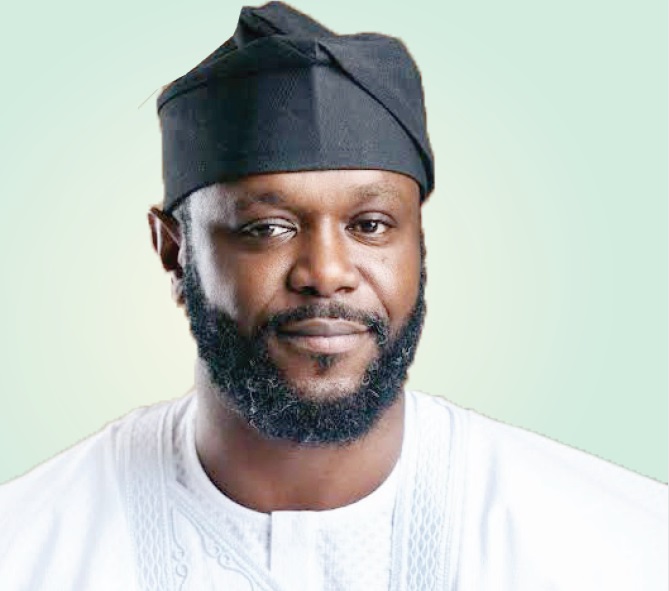
If the youth-inclusive agenda turns out to be the flagship achievement of President Bola Ahmed Tinubu’s administration, as indicators point to, much of the credit will go to the President’s son, Seyi. The 40-year-old Oluwaseyi Tinubu, a lawyer, entrepreneur, and philanthropist play no official role in the government. His primary preoccupation as an entrepreneur is too tender to his businesses as the CEO and co-founder of LoatsadPromomedia, a leading advertising firm, and founder of the Noella Foundation, a non-profit outfit dedicated to youth empowerment and social development.
Yet, Seyi, as he is simply called, has become the bulwark of the youth-inclusive agenda of the Tinubu Administration. Working tirelessly behind the scenes, armed with the experience apparently garnered from running Noella Foundation, he has significantly shaped the essence of youth inclusivity of his father’s government. The first son of the President has been acting as the bridge between the presidency and the younger generation. Seyi Tinubu has emerged as a visible civic actor whose contributions focus on participation, inclusion, and national cohesion within Nigeria’s democratic space. His work reflects a deliberate effort to support institutions, amplify citizen voices, and encourage constructive political engagement, especially among young Nigerians.
Seyi Tinubu has played a visible role in mobilizing youth, promoting grassroots engagement, and pushing for policy inclusion. He has been involved in providing vocational training, startup funding for small businesses, and educational support for disadvantaged youths. But more significantly and specifically, he is credited with pushing for the appointment of young professionals into the administration as ministers, advisers, board members and head of government agencies.
The young man has consistently engaged young people across regions, promoting voter education, peaceful participation, and confidence in democratic processes. Since 2025, Seyi has toured Northern states, meeting with youth groups, traditional leaders, and political stakeholders to foster a sense of inclusion, notably in Yobe and Adamawa states. By convening dialogues and supporting youth-focused initiatives, he has helped to translate political interest into informed civic action—critical for sustaining democracy beyond election seasons.
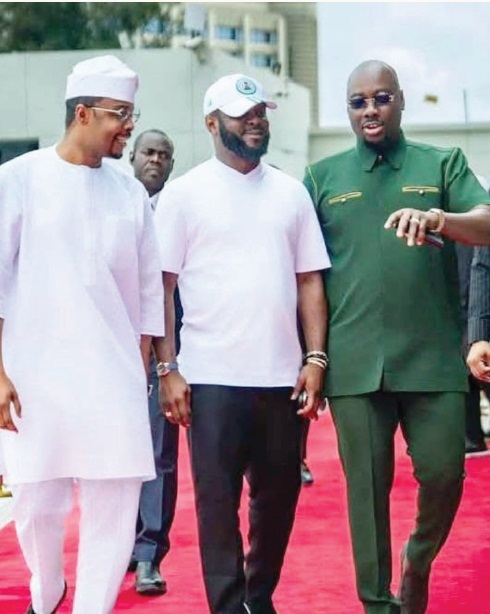
Seyi has been building bridges across divides. Known for his calm, consultative style, Seyi Tinubu engages stakeholders from diverse backgrounds—professionals, community leaders, entrepreneurs, and traditional institutions—fostering conversations that cut across party, ethnic, and generational lines. This bridge-building approach has reduced polarization and strengthened trust in democratic dialogue. In those conversations, Seyi Tinubu’s central message consistently emphasizes unity, peaceful participation, and the legitimacy of democratic outcomes—values that reinforce confidence in Nigeria’s governance framework. He initiated the “Let’s Protect and Not Protest” campaign, urging calm during economic hardships and advocating for constructive dialogue over destruction of infrastructure.
Seyi Tinubu’s involvement at the grassroots—supporting community initiatives and social interventions—connects national policy conversations to everyday realities. Through initiatives such as the CityBoy Movement and the Change Nigeria Initiative, he has connected national policy with local communities, focusing on youth empowerment and entrepreneurship. This proximity to communities helps ensure that democratic participation is grounded in lived experience, not just elite discourse.

Although keeping himself in the background, Seyi Tinubu’s intervention on behalf of Nigerian youth, in support of his father’s administration and for a better Nigeria has not escaped public notice. While some view it erroneously as a sign he is nursing a political ambition for a role in his home state, Lagos, others rightly see it as a patriotic role which every responsible child of a country’s leader must play. Nobody, perhaps, captures the latter viewpoint better than Hon. Abdulhamid Yahaya Abba, Senior Special Assistant to the President on Community Engagement – Northeast. He said in a statement: “Seyi Tinubu has become synonymous with youth advocacy and progressive leadership. His relentless efforts to champion youth inclusion in the current administration serve as a beacon of hope for the younger generation.”
According to Hon. Abba, as an entrepreneur, the President’s son has demonstrated an unwavering commitment to ensuring that young Nigerians have a seat at the table in the nation’s governance. “He embodies a campaign promise fulfilled through his initiatives and contributions that have significantly impacted the current administration’s approach to youth inclusion, recognizing the vast potential within Nigeria’s youthful demographic,” Abba said.
Oluwaseyi Afolabi Tinubu was born October 13, 1985 in Lagos. He studied in both Nigeria and the UK, obtaining a law degree and a Master’s in corporate and commercial law from the University of Buckingham. He co-founded LoatsadPromomedia in 2013, an agency specializing in outdoor advertising, and has grown it into a prominent media firm. Seyi has carved out a professional identity separate from his father’s political career, focusing on advertising, media, and technology. His firm, LoatsadPromomedia, has carved a niche in providing tailored media solutions for blue-chip companies in Nigeria. He is recognized as a leader with a “young lion” approach to innovation in the advertising sector.
He is deeply involved in philanthropic work through the Noella Foundation, named after his daughter, which focuses on empowering women and children. He is a recipient of awards such as the Young Entrepreneur of the Year and various youth ambassador honors. He also holds roles as a patron for sports, including polo. Seyi is frequently described by associates and in the media as a focused and innovative figure with a strong dedication to youth empowerment and community development. He frequently shares updates on his endeavours and philanthropic work on his personal Instagram account.
He is married to Layal Holm and has children.
Tinubu’s under 50 Young Game Changers:
Who’s who

Ayodele Olawande(Age: 36)
Position: Minister for Youth Development
(First appointed Minister of State for Youth Development before his upgrade to full Minister)
Background: Harvard-trained; a construction engineer, community builder and development expert, lifelong youth advocate and leader.
Focus Areas: To inject fresh energy into the ministry, focusing on engaging young people and addressing challenges through initiatives like digital skill acquisition and entrepreneurship.
Key achievements: Introduced the “Youth4Youth” agenda to give millions of youths a sense of belonging; launched the Nigerian Youth Academy (NiYA), the flagship platform driving the “One Youth, Two Skills” campaign, a nationwide movement equipping hundreds and thousands of young Nigerians with market-relevant digital and vocational skills; launched the Corpreneur Support Initiative for Youth Corpers in partnership with Wema Bank; secured Presidential approval for the establishment of a National Youth House in Abuja, to be replicated across all 36 states, a home for innovation, engagement, and inspiration and is pushing for the established of the Green House Initiative, a network of community-based centres to connect Nigerian youths with federal programmes at the grassroots.
Recognitions: PhD (Honoris Causa) in Leadership and Development by Eminence University, Denver, Colorado (EUDC), USA; and Distinguished Fellow and Global Expert of the International Institute of Experts on Political Economy and Administration (I.I.E.P.E.A, Canada). He was honoured as minister of the year 2025 by The Top10 Magazine.

Dr. Aminu Maida (Age: 47)
Position:Chief Executive Officer, NCC
Background: He holds an MEng in Information Systems Engineering from Imperial College, London; a PhD in Electrical & Electronic Engineering, Bath, United Kingdom; and a Post Graduate Diploma in Entrepreneurship (FinTech Pathway) programme, Cambridge Judge Business School, University of Cambridge, United Kingdom. Earlier served as the Executive Director, Technology and Operations at Nigeria Inter-Bank Settlement System Plc (NIBSS), the country’s central switch company owned by the Central Bank of Nigeria (CBN) and all licensed Deposit Money Banks (DMBs) in Nigeria.
Focus Area: To create an enabling environment for competition among operators in the telecommunication industry as well as ensure the provision of qualitative and efficient telecommunications services throughout the country.
Key achievements: Initiated the drive towards ensuring fair tax policies and eliminating every incident of multiple taxation and regulations impacting the Nigerian telecommunications industry; Played a mediating role in the resolution of the disconnection between MTN and GLO dating back to 2009, which Maida described as a “commercial dispute;” ensured considerable and steady increase in active voice and internet subscriptions, including a drop in teledensity; and successfully implemented, in 2024, the Federal Government’s NIN-SIM linkage policy and the Presidential designation of NCC’s infrastructure as Critical National Information Infrastructure (CNII).
Recognitions:Honoured by the Top10 magazine as one of the regulatory agency leaders in Nigeria in2025 in recognition of his outstanding achievements as the Executive Vice Chairman and Chief Executive Officer of NCC

Imaan Sulaiman-Ibrahim fsi(Age: 45)
Position: Minister of Women Affairs
(First appointed as Minister of State for Police Affairs)
Background: A career civil servant, she holds a sociology degree from the University of Abuja and two Master’s degrees (MBA and Management) from Webster University, London. She was Director-General of the National Agency for the Prohibition of Trafficking in Persons (NAPTIP) and Federal Commissioner for Refugees, Migrants, and Internally Displaced Persons (NCFRMI).
Focus Area: Empowering 10 million women and driving economic stability for families.
Key achievements: She launched the Nigeria for Women Scale-Up Project, targeting 10 million women by 2027 with financial literacy, business training, and cooperative support. Established a Child Rights Act Review Committee to harmonize child protection laws and created a dedicated institution for Child Protection and Development; Secured global commitment to support 2 million at-risk children by 2030 and expanded evidence-based parenting programmes to reach 10 million families; initiated a shift for one million households from firewood-based cooking to clean energy solutions; partnered with WEMA Bank to train 500,000 women in vocational skills and entrepreneurship; and empowered women farmers in Benue and Kogi States with ₦1 million each under the WAVE Programme.
Recognition: Awarded The Top10 Magazine’s Woman of the Year 2025 in recognition of her transformative leadership in the Ministry of Women Affairs

Bamanga Jada (Age: 43)
Position: MD/CEO, OGFZA
Background: Graduated from the Federal University of Technology Yola, where he obtained a Diploma in Business Administration (2004) and a Bachelor’s Degree (B.Sc) in Economics (2008). His exceptional academic performance in the university earned him recognition and numerous accolades. Acquired a Master’s degree (M.Sc) in Oil and Gas Operations Management (2013) from the University of Central Lancanshire, Preston United Kingdom, as well as an MBA in Marketing. Worked previously with Ecobank PLC, the Energy Commission of Nigeria. He had also served as Personal Assistant to the Chairman of the Board of Directors at Kano Electricity Distribution Company (KEDCO).
Focus Area: To lead OGFZA, as the national regulatory agency for the oil and gas free trade zones in the country, to foster economic growth and development as well as job creation, focusing on Efficiency and Trust, Infrastructure Excellence, Regulatory Modernization, Local Content Empowerment, Sustainability and Resilience, Investor-focus and Welfare.
Key achievements: Establishment of new oil and gas Free Zones, the Secured Bunkering Anchorage (SBA), Lagos, and attraction of investments to the zones valued at over $30bn and capable of securing 3 million jobs into the country through the Special Economic Zones. The Brass Oil and Gas Free Zone in Bayelsa, has secured a $3.6bn investment commitment through the Brass Fertilizer and Petrochemical Company. These investments have also led to the transfer of skills and technology to the nation through manpower training and value-added technical processes, positioning Nigeria as the preferred investment destination in Africa.
Recognitions: Was named by the Top10 magazine as one of the regulatory agency leaders in Nigeria in 2025 in recognition of his outstanding achievements as the Director General of OGFZA.

Taiwo Oyedele (Age: 50)
Position: Minister of Finance and Coordinating Minister of the economy
Background: Holds National Diploma (HND) in accountancy and finance from Yaba College of Technology and earned a BSc in applied accounting from Oxford Brookes University. Completed executive education programmes at the London School of Economics, Yale University, the Gordon Institute of Business Science, and the Harvard Kennedy School. He is a Professor at Babcock University in Ogun State and a visiting scholar at the Lagos Business School.
Oyedele spent 22 years of his working career at PwC, joining in 2001 and rising to become the Fiscal Policy Partner and Africa Tax Leader. Until his present appointment, he had served the Tinubu administration as the Chairman of the Presidential Committee on Fiscal Policy and Tax Reforms, as well as Minister of State for Finance.
Focus Area: To ensure that recent fiscal reforms translate into tangible benefits for citizens, stabilise the economy, boost productivity and growth through a predictable and investor-friendly policy environment anchored on consistency and clarity, and strengthen fiscal discipline and sustainability through transparent and prudent management of public resources.
Key achievements: Played a critical role in shaping the reforms designed to simplify the tax system, expand the revenue base, and create a more business-friendly environment in Nigeria.
Focus area: To revamp infrastructure development and enhance investor confidence in Nigeria.

Shuaibu Abubakar Audu (Age: 45)
Position:Minister of Steel Development
Background: Son of the late Prince Abubakar Audu, former Governor of Kogi State, Prince Abubakar Audu obtained his Bachelor of Arts (Hons.) in Business Economics with a second-class upper from the University of Leicester in the United Kingdom in 2001; acquired his Master’s degree in International Securities, Investment & Banking (ISIB) from the Henley Business School, University of Reading. Prince Audu bagged another Master’s degree in Business Administration (MBA) from the University of Oxford, United Kingdom. He has spent over 20 years in corporate and investment banking with extensive experience at Stanbic IBTC.
Focus area: To industrialize Nigeria by revitalizing the Ajaokuta Steel Complex and the National Iron Ore Mining Company (NIOMCO) to reduce steel imports.
Key achievements: Pushing for multi-billion-dollar investments, including talks with Jindal Steel Group of India for potential investments in new and existing plants.

Ayo Sotinrin
Position:Managing Director, Bank of Agriculture (BOA)
Background: Holds an Executive MBA from Said Business School, Oxford University; an Advanced Diploma in Environmental Conservation; and a Master’s in Engineering Business Management from Warwick University. He has also held roles at SAO Group and worked with international organizations like the World Bank, AfDB, DFID, and USAID and played key advisory roles on federal and state-level projects. His international background includes roles at the Royal Bank of Scotland International, Deutsche Bank, and the UK Environment Agency.
Focus Area: To mobilize capital, innovate in agribusiness, and improve farmers’ access to funding through the digitalization of processes leveraging Sotinrin’s extensive experience as a development finance expert and former CEO of SAO Group.
Key achievements: His position of Group Chief Executive Officer at SAO Group, an agribusiness company, was marked by groundbreaking agricultural initiatives, including developing a 20,000-hectare oil palm plantation and large-scale poultry, aquaculture, maize, and cassava operations in Ondo State.

Zacchaeus Adedeji (Age:46)
Position:Executive Chairman of the Federal Revenue Service (NRS), formerly the Federal Inland Revenue Service (FIRS)
Background: First-class Accounting graduate from Obafemi Awolowo University and previously served as the Oyo State Commissioner of Finance and CEO of the National Sugar Development Council (NSDC).
Focus Area: To Enhance Nigeria’s tax administration, boosting revenue collection, and implementing tax reforms, including his “tax the fruit, not the seed” philosophy.
He also led SAO Capital to raise over $750 million in infrastructure and development finance, including the landmark $200 million Akure Water Supply Project.
Key achievements: Spearheaded Nigeria’s comprehensive tax re-engineering leading the consolidation of over a dozen legacy laws in the tax system into four new tax laws effective January 1, 2026. The four are Nigeria Tax Act, Nigeria Tax Administration Act, Nigeria Revenue Service (Establishment) Act, and Joint Revenue Board (Establishment) Act. The new order marks the transition of the nation’s tax administration into a smarter, tech-enabled framework that promotes openness, efficiency and above all, that helps to build public trust in public finance management. It also eliminated the old order of multiple tax schemes and muddled governance structure. He introduced measures which ensure that previously embedded leakages are blocked and safety valves built into the system. Other reforms included the adoption of global best practices, the automation of systems, and the upskilling of staff members of the NRS to enhance their morale and productivity. The successes of the reforms are reflected in the continuous spike on the blue side of the nation’s tax balance sheet in recent years.
Adedeji achieved another major milestone, breaking a 22-year jinx by completing NRS House, the headquarters of the Service in Abuja, awaiting official commissioning by the President.
In 2021, ₦6.405 trillion was collected in taxes, a marginal increase over the ₦6.401 trillion target set for that fiscal year. It rose to ₦10.1 trillion in 2022. However, the rhythm began to change in pleasant tunes in 2023, the year Adedeji mounted the saddle, when ₦12.3 trillion was raked in as tax revenue. By the end of 2024, Adedeji’s first full year of taking charge, stamping his imprints of transformative leadership, the tax haul almost doubled to ₦21.7 trillion, a figure that exceeded the ₦19.4 trillion target for that year.
By 2025, the engine revved up, with a whopping ₦22.59 trillion collected within nine months, from January to September, and a record ₦28.3 trillion for the full year, substantially higher than the ₦25.2 trillion projected for the full year. Now full of confidence in its ability and capacity, the NRS has set an ambitious target of ₦40.7 trillion revenue for 2026.

Titilope Gbadamosi
Position:Special Assistant to the President on Youth Initiatives, Monitoring, and Delivery
Background: The Ibadan-born academic, entrepreneur and politician who was special assistant to late former governor Abiola Ajimobi on community relations. She is an active APC member from Oyo State and was previously a candidate for the Zonal Youth Leader position.
Focus Area: Working with the Minister of Youth Development and other MDAs to ensure the monitoring, supervision and delivery of the youth-targeted initiatives of the administration.
Key achievements: Has been involved in initiatives such as the CNG Conversion Technology Training in Ibadan to equip youths with future-ready skills.

Bosun Tijani (Age: 48)
Position:Minister of Communication, Innovation & Digital Economy
Background: He holds a Bachelor’s in Economics (Jos), Master’s in Information Systems and Management (Warwick), and a PhD in Innovation and Economic Development (Leicester). He is a tech entrepreneur who co-founded Co-creation Hub (CcHUB), the largest technology hub in Africa.
Focus Areas: Facilitating universal, ubiquitous and cost effective access to communications infrastructure throughout the country; Promoting the utilization of ICT in all spheres of life to optimize the communications infrastructure – digital content creation, domestic software applications and the delivery of private and public services over the internet; promoting and facilitating the development of the ICT industry and increase the contribution of the ICT industry to GDP; and utilizing ICT to drive transparency in governance and improve the quality and cost effectiveness of public service delivery in Nigeria.
Key achievements: Initiated groundbreaking programmes, notably the Three Million Technical Talent (3MTT) initiative which recorded 1.6 million applications from different demographics across the country within a month. Collaborations with IHS Nigeria and UNDP bolstered the programmes’ strength to show the potential and talents particular to young Nigerians. He introduced the Startup Support and Engagement Portal, streamlining registration for startups and innovation hubs. Conducted a comprehensive mapping of 2,500 innovation spaces across Nigeria to fortify the nation’s digital landscape. His ministry also carried out enhancements in NigComSat’s platforms targeted at expanding connectivity, especially in underserved regions. Entered into a $116 million financing agreement for the I-DICE programme and a global AI partnership of $100 million. The launch of 100 AI jobs by Awarri AI in Lagos marked the commencement of an AI-driven entrepreneurial culture.
Recognitions: Was a member of a highlevel expert advisory group focused on advising the European Commission on how to mainstream research and innovation through Africa-Europe Cooperation; and was selected in 2017 by the African Leadership Institute to be a part of the prestigious Desmond Tutu Leadership Fellowship

Khalil Halilu (Age: 35)
Position:EVC /CEO National Agency for Science and Engineering Infrastructure (NASENI)
Background: An innovator and tech expert, he previously served as a board member/chairperson for several technology and engineering companies, including MACE Nigeria Ltd and CANs Park.
Focus Area: To accelerate NASENI’s transition to a commercial-focused research hub by nurturing an appropriate and dynamic Science and Engineering infrastructure base for achieving home initiated and home sustained industrialization for Nigeria. The mandate of the Agency includes the development of relevant processes, capital goods and equipment necessary for job creation, national economic well-being and progress.
Key achievements: Partnering with SMEs to produce 35 of their products with local content, including electric tricycles, laptops, phones, lithium batteries, solar home systems, and solar irrigation equipment; three of the products have already been launched. Led NASENI to partner with the Rural Electrification Agency to deploy its renewable energy technologies, particularly solar resources, in rural communities aimed at illuminating the areas. The agency has signed an agreement with a Chinese firm to build a Lithium Iron plant worth 150 million dollars, as part of Nigeria’s efforts to meet the global upsurge in energy transition. He’s working with local partners and has deployed at least 5,000 solar home systems in Nasarawa State with the aim of scaling up the intervention to other parts of the country.
According to Halilu, the organization, under its National Tractor and Vehicle Recovery programme, is reviving 55,000 broken-down tractors which would also include converting them into cleaner energy of Compressed and Liquefied Natural Gas.
The agency is also working to revive armoured personnel carriers and abandoned weapons, which was necessary to ensure they did not end up in the wrong hands. The organization has also launched a special fund scheme called Developing Engineering Leaders through Her (DELT-HER), to encourage women’s inclusion in the engineering sector.
The NASENI-Portland Compressed Natural Gas (CNG) Conversion, Filling, Reverse Engineering and Training Centre, a partnership between NASENI and Portland Gas Limited, was commissioned on May 31, 2024. The state-of-the-art facility for the conversion of fossil fuel vehicles to CNG, has the capacity to convert 15 cars every two hours, translating into 2,700 conversions every month.

Tunji-Ojo (43 yrs)
Position:Minister of Interior
Background: Was educated at the University of North London (now London Metropolitan University), where he earned a bachelor’s degree in Electronics and Communication Engineering, followed by a Master’s degree in Digital Communication and Networking. He is a Certified Ethical Hacker, CEH, and CounterMeasures (2006) Britannia Training Academy, United Kingdom. Tunde-Ojo is currently pursuing a Bachelor of Science degree in International Relations, University of London. He’s a former Chairman, House of Representatives Committee on Petroleum Resources Downstream, and representative for Akoko North East/North West Federal Constituency.
Focus Areas: Focus Areas: To ensure the maintenance of internal security, citizenship integrity, and public safety by managing border security (immigration), prison reformation, fire services, civil defense (NSCDC), issuing expatriate quotas/business permits, and overseeing national holidays.
Key achievements: Led efforts to clear passport application backlogs, renovated correctional facilities, and introduced reforms in paramilitary training. Tunji-Ojo introduced revolutionary user-friendly e-platforms for visa applications, allowing passport photo uploads via the immigration portal. This initiative has further streamlined the application process, fostering convenience and accessibility to the country’s travelling documents. He also unveiled enhanced e-passport facilities in key Nigerian embassies across Europe for Nigerian citizens abroad, particularly in Spain, Greece, Austria, Switzerland, and Italy. This proactive stance on international relations also demonstrates his commitment to reciprocity in visa processes, challenging inequitable privileges granted to foreign nationals while championing the rights of Nigerian applicants. His tenure has witnessed an unprecedented promotion of 32,361 personnel across the Nigeria Correctional Service, Nigeria Immigration Service, Federal Fire Service, and Nigeria Security and Civil Defense Corps.
Recognitions: Earned numerous awards, including an Honorary Doctorate Degree in Public Administration and the Sir Ahmadu Bello Platinum Leadership Award of Excellence. Was awarded the “Public Service Person of The Year 2023” by the Leadership newspaper.

Prof. Joseph TerlumunUtsev (Age: 45)
Position:Minister of Water Resources and Sanitation
Background: He holds a PhD in Water Resources and Environmental Engineering and has a background in academia and engineering. Formerly the pioneer Rector of Federal Polytechnic, Wannune, and Commissioner of Water Resources and Environment in Benue State. Served as the Deputy Director and later as a full Director in the Centre for Entrepreneurship Development at the Federal University of Agriculture, Makurdi, (now Joseph SarwuanTarka University, JOSTUM)
Focus Areas: Accelerating irrigation projects, flood control, and providing clean water across Nigeria, aligned with the “Renewed Hope” agenda.
Key achievements: He’s addressing the challenge of underutilization of millions of irrigable hectares of land across the country by delineating about 500,000 irrigable hectares of land for rapid dry season farming to meet up with and mitigate the rising cost of living and attain food sufficiency. He also initiated three new programmes designed to revolutionise Nigeria’s irrigated agricultural landscape, boost food security, create jobs and enhance economic growth, namely, the Water for Expanded Irrigated Agriculture Programme (WEIRPRO), Partnership for Expanded Irrigation Programme (PEIRPRO), and River Basin Strategy for Poverty Alleviation (RB-SPA). On erosion control, Prof. Utsev inaugurated the National Economic Council Adhoc Committee on Flood Mitigation, Adaptation, Preparedness, and Response to develop a roadmap to enhance Nigeria’s capabilities in flood mitigation, preparedness, adaptation, and response, informed by periodic updates from the Nigeria Hydrological Services Agency (NIHSA) and relevant MDAs in the disaster risk reduction sector. The minister unveiled the Annual Flood Outlook (AFO) aimed at enhancing agriculture resilience among vulnerable communities by reducing exposure to climate-related disasters and leveraging the positive effects of flooding for sustainable growth and economic development. He has also unveiled the Water Sanitation and Hygiene Committees (WASHCOMs) report which aims to guide the implementation of WASH services at the local community level.

Engr. Bisoye Coker-Odusote (Age: 40)
Position:Director-General National Identity Management Commission (NIMC)
Background: Previously served as the General Manager/Chief Executive Officer of the Lagos State Infrastructure Maintenance and Regulatory Agency (LASIMRA) and as a Special Adviser on Technology to the then-Governor of Lagos State, Bola Tinubu.
Focus area: To advance NIMC’s digital transformation projects and improving the National Identification Number (NIN) registration processes in Nigeria.
Key achievements: Has deployed cutting-edge technologies and pioneering innovative solutions to address the challenges of identity verification and authentication, leading to significant reduction in waiting time and enhancing the overall efficiency of the system. Deployed over 800 mobile enrollment devices, expanded diaspora enrollment centers and streamlined processes for faster, more efficient enrollment. Cleared several years of backlog of Date of Birth modifications which she inherited and gave a one-month deadline for the same to relevant staff of the Commission to resolve such issues while complaints, such as those whose National Identity Numbers did not hit the NIN Verification Portal, are now resolved within 24 hours. NIMC has enhanced data security to fortify the protection of citizens’ sensitive information. Has ensured regular training and retraining of staff of the Commission, emphasizing customer-centric approaches. Forged strategic partnerships with governmental agencies, private organizations, and international bodies to enhance NIMC’s capacity, foster innovation, and promote information sharing for improvements in identity management, spearheaded the integration of biometric advancements and artificial intelligence into the registration and verification processes to position NIMC at the forefront of technological innovation in identity management. 120 million Nigerians registered with NIN.

Nkechi Egerton-Idehen(Age: 46)
Position: MD/CEO, NIGCOCOMSAT
Background: Holds a degree in Electronics Engineering from the University of Nigeria, Nsukka; an MBA from the University of Warwick; and executive certifications from Harvard, Yale, and Columbia Business Schools. She is a seasoned professional in the tech sector, with previous experience as the Head of Sales for Middle East and Africa at Meta and Country Manager for Avanti Communications.
Focus Area: To reposition the Nigeria’s digital economy and enhance broadband penetration.
Key achievements: Initiated a comprehensive restructuring process aimed at transitioning NIGCOMSAT from a struggling service provider into an energetic, well-focused industry player. This involved reassessing priorities to increase internally generated revenue (IGR) and improve customer satisfaction. Idehen has pushed for the expansion of 4G and 5G network coverage, alongside leveraging satellite technology for better broadband penetration across Nigeria, including collaborations with state governments (e.g., Abia and Imo) to improve digital infrastructure. She has fostered partnerships with various sectors to enhance digital connectivity, including the Nigerian Air Force for defense-tech synergies; the Ministry of Aviation for digital infrastructure; and NTA for service delivery. She has prioritized grassroots engagement through initiatives such as the NIGCOMSAT VSAT Training and SpaceTech Hackathon (e.g., in Calabar) to build local capacity in space technology. She also launched the NIGCOMSAT Accelerator 2.0 to support space-tech innovators.

MojoyinoluwaDekalu-Thomas
Position:Managing Director, Nigeria Electricity Liability Management Company (NELMCO)
Background: Holds an L.L.B (Hons.) from the University of Buckingham and a Post Graduate in International Relations from the University of Kent at Canterbury, UK. Gained international management experience from working in executive management positions in the UK, Germany, Belgium, South Africa and Nigeria and in diverse industries including Legal, Oil and Gas, Telecommunications, Financial Services and Technology
Focus Area: Responsibility for managing all the PHCN liabilities leading up to the November 1, 2013 handover of the companies, as well as the management of the non-core assets of the companies, prior to disposal of same.

Captain Alex Badeh Jnr (Age: 40)
Position:Director General, Nigerian Safety Investigation Bureau (NSIB)
Background: Obtained a degree in Biological Sciences from the University of Wolverhampton, England, and has held prominent positions with reputable airlines such as American Airlines, American Eagle, Arik Air, and Aero Contractors Nigeria Ltd., piloting a variety of aircraft including Boeing 737s, Airbus A330s, Airbus A320s, and Bombardier CRJ 200/700/900s
Focus Area: To align NSIB’s mandate with the Minister of Aviation Festus Keyamo’s five-point agenda, prioritizing safety and a zero-accident rate in Nigerian transport.
Key achievements: Deployed cutting-edge technology towards success in unravelling the root causes of aaccidents and enhancing safety measures. Enhanced NSIB workers’ welfare to uphold the highest safety standards and diligence in investigating accidents, thereby setting new benchmarks in accident investigation excellence.
Recognitions: Has received prestigious accolades such as the Minister’s Commendation for Safety from the Nigerian Minister of Aviation and the Pilot Mentor Award from Aero Contractors Nigeria Ltd.

Mr. Uzoma Nwagba (Age: 36)
Position:Managing Director/CEO, Nigerian Consumer Credit Corporation (CREDICORP)
(Initially served as Chief Operating Officer of Nigeria’s Government Enterprise and Empowerment Program (GEEP)
Background: Holds a Master’s of Business Administration from the Harvard Business School and a first-class Bachelor of Engineering degree from Howard University, Washington DC. Served as Chief Operating Officer of the Government Enterprise and Empowerment Programme (GEEP), where he oversaw TraderMoni, MarketMoni, and FarmerMoni, programmes that provided microcredit to millions of small businesses and farmers across Nigeria. Earlier in his career, he was a Product Manager at Microsoft, where he led technology solutions for emerging markets.
Focus Area: Expanding access to consumer credit for Nigerians. In this role, he is shaping national efforts to use credit as a tool for empowerment and financial inclusion.
Key achievements: Under his leadership, CREDICORP has disbursed over ₦37 billion in consumer credit in one year (2025/2026). Over 200,000 Nigerians have benefited from the scheme, with a focus on workers, a significant percentage (over 65%) of them first-time formal credit borrowers. This enables them to acquire vehicles, solar power systems (CNG conversion), and other household goods. Secured and managed an initial ₦100 billion in funding to initiate the first phase of the consumer credit scheme. Built partnerships with commercial banks, microfinance banks, and fintechs (like Credit Direct), creating a “Participating Financial Institution” (PFI) model.
Recognition: The organization, under Nwagba’s leadership, won the “Consumer Credit Access Company of the Year” award at the 13th BAFI Awards in 2025.

Mr. Mark Okoye (Age:40)
Position:MD/CEO, South East Development Commission (SEDC)
Background: Holds a Bachelor’s degree in Finance and Investment from George Washington University and top executive certifications in Leadership, Innovation, and Development from world reputed Harvard Kennedy School in Cambridge, Massachusetts. He previously served as Commissioner for Economic Planning, Budget and Development Partners in Anambra State — one of the youngest appointees in Nigeria’s Fourth Republic. He has also held key leadership roles as Executive Director of the Anambra State Investment Promotion and Protection Agency (ANSIPPA) and Senior Special Assistant on Investments to the Governor.
Focus Area: To tackle infrastructure deficits, security challenges, and foster economic growth in the Southeast. His target is to catalyze a billion-dollar regional economy through private sector partnership and the “Renewed Hope” agenda.

Ismaeel Ahmed OON (Age: 46)
Position:Executive Chairman of the Presidential Initiative on Compressed Natural Gas and Electric Vehicles (Pi-CNG&EV) Pi-CNG&EV|
Background: An alumnus of the University of Abuja, from where he obtained a Bachelor of Laws degree in 2005 and was called to the bar in 2006. Later received a Master’s degree in International Relations from Webster University in St. Louis, Missouri, United States. Was Senior Special Assistant to the President on National Social Investment Programmes and was a key member of the Presidential Communication Team of the late President Buhari administration.
Focus Area: To coordinate the operations of the presidential initiative, which is designed to alleviate the effects of removing fuel subsidies by offering cheaper, more affordable and cleaner energy options.
Key achievements: Officially launched the Vehicle Conversion Financing Scheme in partnership with Moniepoint, CrediCorp and the Nigerian Credit Guarantee Company. The scheme makes it possible for Nigerians to convert their vehicles and tricycles to CNG without being held back by upfront costs, making the switch practical, flexible and affordable. The impact is real and immediate relief for millions of Nigerians who spend a significant portion of their income on transport.
Recognitions: Received formal Presidential commendation the active role he played in the evolution of the progressive political front through the formation of the All-Progressives Youth Forum and by serving as the APC National Youth Leader, during which he helped mobilize young Nigerians into the APC. The President, in a birthday message, also hailed Ahmed for his efforts as Senior Special Assistant to former President Muhammadu Buhari on Social Investments and later as Secretary of the Policy and Strategy Directorate of the Tinubu/Shettima Campaign in the run-up to the 2023 presidential election.

Mr. Mohammed Abba Isa
Position:Senior Special Assistant to the President on Disability Matters
Background: Obtained a Bachelor’s and Master’s degrees in Public Administration with honors from the University of Maiduguri. He has been a distinguished champion of persons with disabilities with over a decade of experience in local and international advocacy on matters concerning persons with disabilities.
Focus Area: To proactively create avenues of opportunity for inclusion through the inculcation of PWD requirements and perspectives in the policies and programmes of all Ministries, Departments, and Agencies of the Federal Government while working closely with sub-national authorities to build a national consensus on PWD-friendly policy and environmental conditions in collaboration with the National Commission for Persons with Disabilities (NCPWD).

Usoro Akpabio (Age: 45)
Position:Managing Director, South South Development Commission (SSDC)
Background: Earned a degree in Political Science, followed by executive certifications in Public Policy and Energy Strategy from leading institutions in Nigeria and the UK. Has been involved in governance, public policy and community engagement over the years and was a member of the students’ union government in her undergraduate days. Widely experienced in project execution and grassroots mobilization.
Focus area:To address infrastructure deficits, environmental degradation, and youth unemployment in the oil-rich South-South region.
Recognitions: Was awarded, in 2019, the African Achievers Award for impact in energy and education and holds the Fellowships of the Royal Society of Arts (FRSA) and the Council of Energy Executives (FCE).

Engr Jennifer Adighije (Age: 42)
Position:M.D/CEO, Niger Delta Power Holding Company
Background: Earned a Bachelor’s degree in Electrical/Electronic Engineering from the University of Lagos and a Master’s degree in Wireless Networks & Telecommunications from Queen Mary University of London. Previously held positions at PHCN (former NEPA), Globacom, Helios Towers Nig. and Central Bank of Nigeria.
Focus Area: Optimizing asset performance at NDHCN to increase revenue, enhancing organizational processes, and driving technological transformation in Nigeria’s power infrastructure.
Key achievements: Initiated strategies to address the National Integrated Power Projects (NIPP), including a reported focus on restoring power plants, such as the Ihovbor Power Plant.
Recognition: Was named among the finalists in the Young Designer Category of the MTN Lagos Fashion and Design Week Awards in August 2012.

Moremi Ojudu (Age: 36)
Position:SSA on Community Engagement for the South-West region
Background: Daughter of BabafemiOjudu, a former special political adviser to Vice-President Yemi Osinbajo, Moremi is an experienced political strategist, activist, and public relations expert with a focus on youth development, gender equality, and socioeconomic empowerment. She has an extensive background in legislative persuasion and is passionate about engaging young people in political processes, having led projects like “Youth Next.”
Focus area:Ojudu bridges the gap between the Presidency and communities in the Southwest (Lagos, Ogun, Oyo, Osun, Ekiti, and Ondo states), promoting the “Renewed Hope Agenda”. She engages with traditional leaders, youth groups, and women’s associations in the Southwestern states to ensure grassroots needs are represented in government policies.
Key achievements: Has organized engagements on issues such as tax reforms and fuel subsidy removal, focusing on communicating with stakeholders in local languages. Works on community projects such as water supply, education initiatives, and food outreach programs (e.g., during Ramadan/Lent). She has also driven campaigns for tax awareness in local communities.

Hon. Shuaibu Jaja Bawa
Position:MD, Upper Niger River Basin Development Authority (UNRBDA)
Background: A lecturer and former Chairman of Kudan Local Government Area and former Chairman of the Association of Local Governments of Nigeria (ALGON) in Kaduna State.
Focus Area: To harness and develop surface and underground water resources for multi-purpose use, focusing on irrigation, agricultural, and rural development in Niger, Kaduna, and the FCT. It prioritizes economic diversification, job creation, and poverty reduction through infrastructure

Chioma Nweze
Position:SSA to the President on Community Engagement for the South East region
Background: A lawyer, she was formerly the Commissioner for Trade and Investment in Ebonyi State under Governor Dave Umahi.
Focus area: To foster engagement and promote the Renewed Hope Agenda in the South-Eastern states of Anambra, Enugu, Ebonyi, Abia and Imo.
Key achievements: Has launched the South East Citizens Assembly and the South East Skills Acquisition and Empowerment Programme. Actively conducting needs assessments and promoting economic empowerment in the South-East region. Engaged with students and faculty at the University of Nigeria, Nsukka (UNN), to promote community involvement and address regional challenges.

Tosin Adeyanju(Age: 46)
Position:Executive Secretary/CEO, National Lottery Trust Fund (NLTF)
Background:Graduate of Political Science with a Masters degree in International Affairs and Diplomacy from Ahmadu Bello University, Zaria. A former student unionist, he was a prominent member of the Tinubu Support Group (TSG) and focuses on ensuring transparency, youth engagement, and effective funding for public welfare projects.
Focus area:Strengthening the NLTF to improve social welfare through lottery funds, prioritizing transparency and accountability.
Key achievements:He has initiated or implemented 78 projects nationwide to directly impact sectors like education, health, and sports, ensuring the NLTF reaches vulnerable citizens. Under his leadership, the NLTF donated significant medical equipment—including X-ray machines, incubators, and defibrillators—to hospitals, such as the Ijebu Jesa General Hospital in Osun State. He established a partnership with the News Agency of Nigeria (NAN) to boost publicity and ensure transparency in NLTF interventions. Adeyanju initiated partnerships with the National Orientation Agency (NOA) and the Defense Headquarters for the Africa Military Games and adopted an open-door policy to improve efficiency and boost morale within the agency, transforming the NLTF into a more proactive interventionist agency.
Recognitions: Honoured by Democracy Newsline Newspaper for his contributions to national development.

Mustapha Abdullahi (Age: 41)
Position: Director-General/CEO, Energy Commission of Nigeria (ECN)
Background: Holds a Bachelor’s degree in Mechanical Engineering from Aliko Dangote University of Science and Technology (ADUSTECH, formerly Kano University of Science and Technology (KUST)); an MSc from the University of Salford, UK; a Postdoctoral fellowship as a Research Associate in the School of Engineering; and PhD degree in Mechanical Engineering at University of Manchester.
Focus area: Delivering sustainable, inclusive, and technology-driven energy solutions that support national development goals and align with international climate commitments. To drive the administration’s energy transition, specifically strengthening the renewable energy sector.
Key achievements: In collaboration with the United Nations Environment Programme (UNEP) and other partners, launched a training programme in the skills needed to enforce energy performance standards for air conditioners in the country; was part of Nigeria’s delegation to COP 28 in Dubai UAE where he sealed a tripartite agreement with an energy consulting group, the Global Wind Energy Council (GWEC), and the Niger State Government on wind energy development in Niger State.
Recognition:Honoured by Confluence University of Science and Technology (CUSTECH), Osara, with a Doctorate Degree of Engineering (D.Eng.), Honoris Causa.

Musiliu Olalekan Oseni
Position:Chairman, Nigerian Electricity Regulatory Commission (NERC)
Background: PhD in Business/Energy Economics — University of Cambridge; M.Sc. in Energy Economics and Policy (Distinction) — University of Surrey; and B.Sc. in Economics (First Class) — University of Ibadan. Joined the Commission in January 2017, and served variously as Commissioner for Planning, Research and Strategy; and Vice-Chairman and Commissioner for Market Competition and Rates.
Focus Area: To build a resilient electricity sector that supports economic growth, protects consumers, and strengthens Nigeria’s energy future.

John Ugochukwu Uwajumogu (49 yrs)
Position:Special Adviser on Industry, Trade & Investment
Background: Holds a Master’s degree in International Affairs from the Fletcher School at Tuff University, and is a member of the American Institute of Chartered Public Accountants (AICPA). He was a Partner with EY and the Energy leader for West Africa with over 20 years of advisory experience primarily in the energy industry. He has significant experience working in the energy markets in Houston, Texas, and Calgary, Alberta.
Focus Area: To strengthen the administration’s policy implementation in the area of industry, trade and investment.

Comrade Asefon Sunday Adedayo (Age: 45)
Position:Senior Special Assistant on Student Engagement
Background: Holds a Higher National Diploma from Crown Polytechnic, Ekiti, and a Post Graduate Diploma from Ekiti State University, Ado Ekiti. He is the immediate past National President of the National Association of Nigerian Students (NANS).
Focus area: Facilitating communication between the government and Nigerian students, advocating for student interests, and fostering dialogue.

Gift John Bull (Age: 34)
Position:Senior Special Assistant to the President on Community Engagement (South-South)
Background: A political strategist and advocate for inclusive governance within the All Progressives Congress (APC).
Focus Areas: Grassroots mobilization, stakeholder engagement, environmental sustainability, and promoting agricultural initiatives (e.g., Project Earn From The Soil). Actively engages with community stakeholders, environmentalists, and farmers in the South-South region to ensure policy understanding and receive feedback.
Key achievements: Implemented agricultural empowerment schemes across the six states of the South-South, supporting small holder farmers, particularly, the women, with seedlings and machineries to optimize food production in the region. Over 6,000 women have been impacted directly and indirectly.

Sadiq Munir I. Rabiu(Age: not stated)
Position:SA to the President on Capacity Development
Background: Holds a Bachelor’s degree in Business Information Systems and Management from Middlesex University, Dubai, and an MBA in Human Resources from Nile University of Nigeria, Abuja. His professional experience spans leadership positions in mining, logistics, and operations management.
Focus Area: Harnessing Nigeria’s demographic potential to deliver inclusive and lasting growth.
Key achievements: Has advanced Nigeria’s capacity-building agenda by facilitating partnerships with government institutions, international development institutions and the private sector, including collaborations with the United Nations Institute for Training and Research (UNITAR), the Development Bank of Nigeria (DBN) and the National Automotive Design and Development Council (NADDC). He is driving the integration of structured training, entrepreneurship support, and sustainable livelihoods into national policy frameworks
Recognition: Was awarded The Top10 Magazine’s Young Public Official of the Year 2025 due to his role in driving President Tinubu’s Renewed Hope Agenda.

Olu A. Verheijen
Position:Special Adviser to the President on Energy
Background: Has a Master’s in Public Policy from the Harvard Kennedy School of Government and is a strong advocate for enhancing the capacity of local firms to take over assets from International Oil Companies (IOCs) to create jobs. Has nearly 20 years’ experience in the gas and renewables sectors across Sub-Saharan Africa, and is currently Managing Director at Latimer Energy, a consulting firm advising clients on value optimization in acquisition, development and management of energy assets. Previously, she was a Partner at Persistent, an early-stage investment firm with a pan-African portfolio of distributed renewables companies, a Deal Lead at Shell and advised on gas commercialization and M&A transactions, and worked for Moody’s Investors Service in New York. Olu is the Founder/CEO of BFA Foundation.
Focus area: Accelerating investment in infrastructure, advancing renewable energy, improving local content, and providing cleaner cooking solutions for women.
Key achievement: Spearheaded Presidential Directives 41 and 42, designed to streamline contracting timelines and lower costs in the oil and gas sector. Has been instrumental in developing executive orders aimed at reducing project costs, implementing performance-based tax incentives, and optimizing fiscal policy to attract investment into Nigeria’s energy sector.

Abiodun Essiet (Age: 40)
Position:Senior Special Assistant on Community Engagement for the North Central region
Background: Earned a Bachelor of Science in Nursing (BNSC) degree from the Ladoke Akintola University of Technology (LAUTECH), Ogbomosho, Osun State, and a Master’s degree in public health from the College of Medicine, University of Ibadan. Also holds a Diploma in Development Leadership and a Certificate in Community Development Leadership and Peace Building from Coady International Institute, Canada. She is pursuing a PhD in International Development at the University of International Business and Economics (UIBE), Beijing.
Focus area: To strengthen community-based peace structures, promote national unity, and ensure grassroots understanding of government policies, particularly in the North Central zone.
Key achievements: In November 2025, she was deployed to Plateau State to facilitate peace efforts between conflicting communities, meeting with various leaders including the Fulani Miyetti Allah and community leaders.

Prince Damilotun Aderemi
Position:Senior Special Assistant (Private Secretary) to the President
Background: A great-grandson of the late Chief Obafemi Awolowo, Aderemi trained as a lawyer with an LLM in International and Commercial Law from the University of Buckingham, specializing with distinction. He also holds a degree in Chemistry. Had worked as a lawyer and was involved in major financial deals, including advising on Nigeria’s $300 million diaspora bond and a $500 million Eurobond issuance.
Focus area: Acting as a key Private Secretary, involved in high-level policy, including communicating approvals to the FIRS regarding petroleum importation duties.

Abdullahi TankoYakasai
Position:Senior Special Assistant on Community Engagement for the North-West zone
Background: Previously served as the National Coordinator of Northern Young Professionals for Tinubu.
Focus area: To directly engage citizens and bridge the gap between the presidency and communities of the Northwestern geopolitical zone. This includes reintegrating out-of-school Almajiri children, renovating schools, and managing community-based initiatives in the North-West region.
Key achievements: Has been involved in distributing welfare items, such as rice, to residents in Kano State as part of the administration’s support for vulnerable groups.

Linda Akhigbe
Position:Senior Special Assistant to the President on Strategic Communications
Background: Holds a first degree in Mass Communications and a Master’s degree in Media, Communications and Public Relations. Worked as a Senior Parliamentary Correspondent and Head of Presentation for Channels Television and host of Channels Television’s parliamentary program, _The Gavel. She was part of the new presidential media advisory team and was also seconded to serve as the Communications Adviser to the President of the ECOWAS Commission.
Focus area: Part ofa larger Presidential media team charged with enhancing the dissemination of government policies.

Temitola Adekunle-Johnson
Position:Special Adviser to the President on Job Creation & MSMEs in the Office of the Vice-President
Background: Prior to his appointment, Mr. Adekunle-Johnson served in the same portfolio as Senior Special Assistant in the office of the Vice President.
Focus Area: To strengthen the administration’s focus on job creation, MSME support, and the expansion of national clinics.
Key achievements: Has diligently supervised the implementation of the administration’s policies and programmes in areas of job creation and development in the micro, small and medium enterprises space in Nigeria. Some of these initiatives include the Expanded National MSME Clinics, and the Shared Facility Initiative, among others.

Hamza Ibrahim Baba (Age: 46)
Position:National Programme Manager, Government Enterprise and Empowerment Programme (GEEP)
Background: An APC grassroots mobilizer, often noted for his work with the party in Northern Nigeria. He holds a Master’s degree in Disaster Management from the University of Lagos, a Master’s in Healthcare Management from Benue State University, and an MBA from the University of Ilorin—bringing a robust academic foundation to his dynamic and impactful career.
Focus Area: To lead the GEEP initiative which focuses on providing soft, interest-free loans to small-scale businesses, including the 3.0 “Farmer Money” initiative targeted at boosting financial inclusion for farmers.
Key achievements: Played a pivotal role in the establishment of the National Social Investment Programme Agency, NSIPA, through key legislative interventions during his tenure as special assistant to the then speaker of the House of Representatives, Femi Gbajabiamila (2019–2023). He was also instrumental in the amendment of the Act establishing the National Commission for Refugees, Migrants, and Internally Displaced Persons, thereby enhancing the agency’s mandate in providing durable solutions for displaced persons and others in need of humanitarian assistance.
As a special assistant on Humanitarian Affairs to the Speaker in the 9th Assembly, he successfully fostered collaboration between the National Assembly, international NGOs, and relevant MDAs, resulting in impactful programmes for vulnerable populations nationwide.

Yusuf Kamorudeen Olawale
Position:Personal Assistant to the President on Special Duties.
Background: His academic achievements include a Bachelor of Science in Education degree in Chemistry from the University of Lagos, a Postgraduate Diploma in Security and Strategic Studies from Nasarawa State University’s Institute of Governance and Development Studies and a Master’s in Business Administration from Abeokuta Business School at Crescent University.
Focus Areas: Youth development, educational advancements, and community intervention, specifically within Ogun and Lagos states.
Key achievements: Known for awarding scholarships to students, supporting artisans, and facilitating youth summits.
Recognitions: Was conferred with the prestigious Doctor of Public Administration (DPA – Honoris Causa) by the Africa Institute of Public Administration (AIPA), in recognition of his outstanding contributions to public administration, leadership, and community development. Named Education Advancement Personality of the Year (2025) and Social Impact Public Servant of the Year.

Hon. Nasir Bala Aminu Ja’oji
Position:Senior Special Assistant on Citizenship and Leadership
Background: Formerly served as Special Adviser on Mobilization to the Kano State Governor and was a member of the Governing Council of Coordinated Arewa Youth Groups.
Focus Area: To lead initiatives that strengthen national identity and promote active citizenship, aligned with the administration’s goals. Update:Resigned his appointment recently to pursue other political ambitions for 2027.
Key achievements: Promotion of women and youth empowerment, entrepreneurship, and community development.

Dr. Olayiwola Awakan
Position: Director General, Nigerian Tourism Development Authority (NTDA)
Background: He holds a Bachelor of Arts Degree in Mass Communication from Olabisi Onabanjo University, Ogun State, and a Master’s Degree from the University of Lagos, as well as a Certificate in Community Journalism from RUDN University, Russia. A multiple award-winning broadcast journalist, dramatist, poet, and storyteller whose works cut across media, tourism, and theatre.
Focusarea: To advance the “Renewed Hope” agenda by leveraging tourism as a major economic driver through partnerships and improved tourism infrastructure.
Recognitions: Was appointed Board Chairman of the African Travel Commission (ATC), a position that underscores Nigeria’s growing influence in shaping tourism policies and partnerships across the African continent. Was honoured with the Custodian of Culture Award by Lead City University; won the 2022 Nigeria Media Merit Award (NMMA) for TVProduction of the Year and received an Honourable Mention at the 2023 Diamond Awards for Media Excellence. In 2021, he was named among the recipients of the Royal African Awards by His Imperial Majesty, the Ooni of Ife, Adeyeye Enitan Ogunwusi. Dr. Awakan was also a two-time winner of the Trek Africa TV Reporter of the Year Award (2019 and 2020), alongside several other recognitions for his impactful special reports and documentaries.

Charles Odii (Age: 38)
Position:Director General/CEO, Small and Medium Enterprises Development Agency of Nigeria (SMEDAN)
Background: Holds a BSc in Management Information Systems from Covenant University and an MSc in Marketing and Communication from Pan Atlantic University. His global work experience covers impact investment, financial services, pharmaceutical, education, entertainment, manufacturing, aviation, retail, fashion and technology consulting.
Focus Area: To provide access to finance, capacity building, market access for young entrepreneurs, and the “Grow Nigerian” initiative. He is implementing a seven-point agenda aimed at fostering prosperity through MSME growth, including digital and data-driven approaches.
Key achievements: Set up a National Council on SMEs to uniquely position the agency to drive policy changes and facilitate inter-governmental collaboration for strategic SME investments. He implemented reforms incorporating digital and data-driven approaches to address challenges hindering SME growth and foster prosperity. SMEDAN Odii secured a groundbreaking agreement with Sterling Bank to unlocking a N5 billion fund at single-digit interest rates to empower businesses. Over 200,000 applications were received and subjected to due diligence preparatory to disbursement.
Another job creation and funding initiative is the SMEDAN Matching Fund Agreement with Anambra and Enugu State Governments. Collaborating with the two state governments, the agency injected N1billion into MSMEs in each state under a matching fund agreement. Also to fund SMEs and create jobs, the agency introduced the Conditional Grant Scheme (CGS) which has revitalized economic activities at the grassroots level with a cash injection of N50,000 into nano businesses. He created the Green Energy and Climate Change Desk to address environmental challenges impacting businesses, supporting displaced businesses and promoting the adoption of green energy solutions. The agency also commissioned its state-of-the-art Head Office Complex equipped with modern work hubs. The agency also launched the SMEDAN Undergraduate Internship Programme (SUIP) in commitment to early entrepreneurship readiness to provide students with real-world business experience and resources to start, continue, and scale. Baze University served as the pilot ground, with more universities set to partner with the agency to execute the programme.

Mohammed Sheidu
Position:Executive Secretary, Nigeria Police Trust Fund (NPTF)
Background: Obtained a Bachelor of Science in International Relations and a Master’s in Business Administration (MBA) both from Georgia State University, Atlanta Georgia, USA. Has a Security Management Certification from Greater Heights Nigeria and he’s a Certified Information Systems Security Professional (CISSP). Has over 15 years of experience spanning security consultancy, executive administration, and real estate management. As the current Executive Secretary of the Nigerian Police Trust Fund (NPTF). Mohammed is committed to enhancing the operational capabilities, welfare, and infrastructure of the Nigerian Police Force through strategic initiatives and effective resource management.
Focus Area: Enhancing the operational capabilities, welfare, and infrastructure of the Nigerian Police Force through strategic initiatives and effective resource management.
Key achievements: Instrumental in leading efforts to upgrade critical police training institutions such as the Nigeria Police College and Training School, Ikeja. Has initiated measures aimed at providing sustainable power solutions to police facilities and improving living conditions for police personnel across Nigeria. He is also actively involved in raising both domestic and international funds to support the NPTF’s mission, including innovative projects like the Police Benevolent Fund and the development of Police REITs to attract private sector support.

Hafsat Bakari (Age: 37)
Position:Director/CEO, Nigerian Financial Intelligence Unit (NFIU)
Background: Studied Law at University of Ahmadu Bello. That legal background ultimately positioned her as an expert in anti-money laundering, counter-terrorism financing, and counter-proliferation financing. Prior to becoming Chief Executive Officer, she previously served as a Deputy Director at the NFIU and held positions at the Economic and Financial Crimes Commission (EFCC).
Focus Area: To strengthen the fight against illicit financial flows and enhance national security.
Key achievements: Got Nigeria delisted from the Financial Action Task Force grey list, thereby restoring global confidence in Nigeria’s financial system. International banks and investors can now engage Nigerian institutions with fewer compliance barriers, reducing transaction costs and improving cross-border flows.

Dr Jobson Oseodion Ewalefoh (Age: 50)
Position:Director-General of the Infrastructure Concession Regulatory Commission (ICRC)
Background: Holds a PhD in Development Studies from the University of South Africa (UNISA) and Master’s degrees in Economics (MSc), Management Information Technology (MIT), Public Administration (MPA), Business Administration (MBA) and Bachelor of Science in Computer Science (BSc) from the University of Benin. Has over two decades of experience in government and International Development Organizations, in addition to expertise in Public Sector Reforms, Public-Private Partnerships, Public Policy, Procurement and Development. Until this appointment, he was the Director in charge of the Public Private Partnership Resource Department (P3RD) of the Infrastructure Concession Regulatory Commission (ICRC).
Keyachievements: Introduced new guidelines for PPP projects in Nigeria to streamline infrastructure development.

Hon. Delu Bulus Yakubu (Age:46)
Position:SSA to the President on humanitarian affairs and poverty alleviation
(Pioneer National Coordinator/Chief Executive Officer of the National Social Investment Programmes Agency, NSIPA)
Background: Was educated at Adamawa State College of Agriculture, Mubi, and Ahmadu Bello University – Kaba Campus, Kogi State. Worked in various Federal Government agencies, including National Orientation Agency, Standards Organization of Nigeria and the National Social Investments Agency. She’s the founder of the DeluJames Foundation, a nongovernmental organization catering for the needs of Widows, Empowerment of the Girl-Child, Almajiris and the Physically Challenged. Wasppointed the Country Director for Poverty Eradication by the United Nations Economic and Social Council (UNESCO). She was also, the Country Director for Youth Initiative in Africa.
Focus Area: To improve the efficiency and transparency of the National Social Investment Programmes Agency.(NSIPA) under the “Renewed Hope” agenda.

Omotola Odeyemi (Age: 45)
Position:Chief Executive Officer, Nigerian Postal Service (NIPOST)
Background: Obtained first degree in Electrical Engineering from Morgan State University, Maryland, and a Master’s degree in Systems Engineering from George Washington University, Washington DC. Had over 15 years of experience in technology policy and public sector roles, including former roles at Uber Technologies and the Lagos State government.
Focus area: To transform NIPOST into a 21st-century institution, leveraging technology for logistics and economic inclusion.