
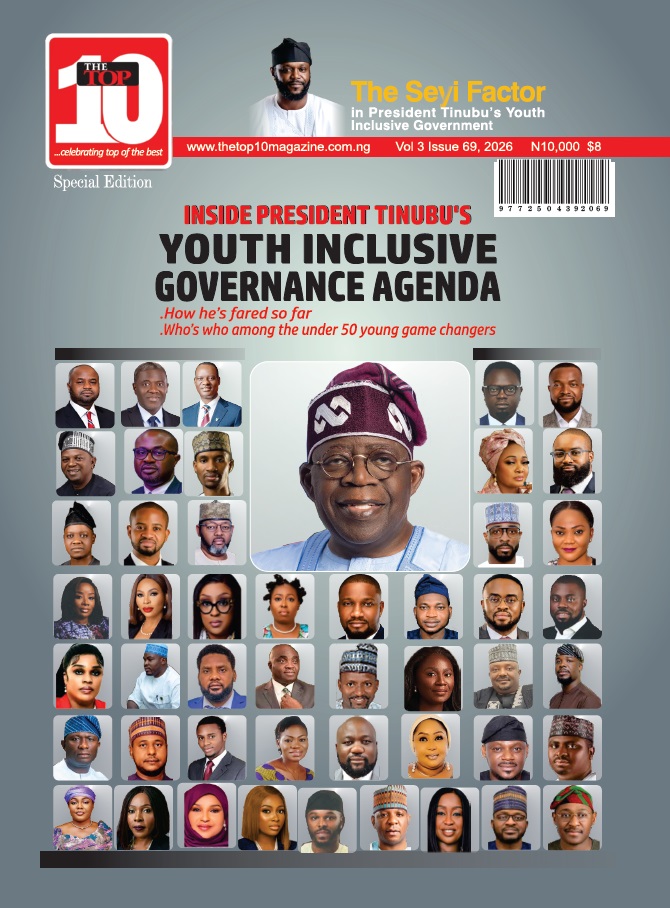
Before assuming office as Nigeria’s President in 2023, Bola Ahmed Tinubu, was very clear about his intention to give the country’s youths a pride of place in his government and a better deal society. He promised to appoint young Nigerians to ministerial positions and specifically announced the reservation of three cabinet slots for individuals under 40 years and six more for those under 50, approximately 10% of the average Nigerian cabinet size which hovers around 30 members.
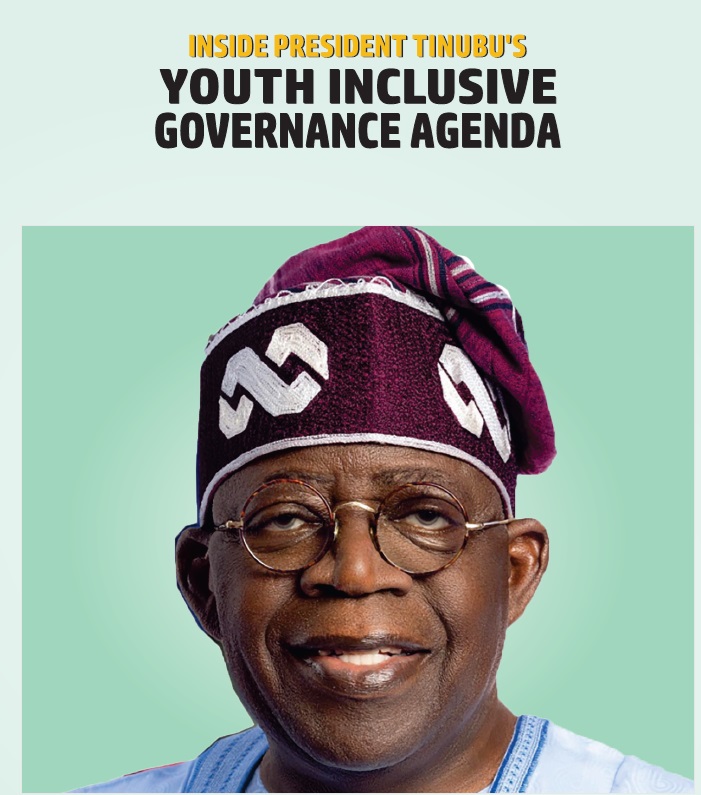
Naturally, Nigerian youths became excited. First, because this high proportion is unprecedented. Secondly, it would align Nigeria with international best practices where youths are increasingly dominating governments. The excitement also stemmed from the novelty in the courage of an aged incoming President pledging to challenge the existing order – an order dominated by recycled old politicians; an order in which youths were either completely excluded from cabinet or in which the appointment of an odd youth here and there into ministerial positions felt like an afterthought. The President’s open declaration to change the order in favour of those at the opposite end of his own generation could not but raise hope for youth inclusive governance and better deal and future for Nigerian youths.
Almost three years into his four-year term, how has President Tinubu fared on his agenda for a youth-inclusive governance? How does reality compare to promise? To what extent has performance matched expectations? On the strength of available evidence, the President’s scorecard on this item reads: commendable.
The Nigerian Youth Policy document expired about a year before Tinubu became President while a new one is not in place yet. Thus, there is no official document providing the framework for the formulation, implementation and assessment of youth policies and programmes of this administration. This leaves the analyst with the options of using international standards (best practices, peer review, trends), the country’s governance antecedents or the President’s own promises as benchmarks for assessing his administration on youth inclusivity.
International standards (best practices, peer review, trends) for youth inclusion in governance emphasizes moving beyond tokenistic participation toward meaningful youth engagement, where young people are recognized as equal partners in decision-making. These standards, heavily influenced by the UN Sustainable Development Goals (SDGs), the OECD, and the Commonwealth, require that youth have direct, sustained input into policy formulation and implementation.
The use of governance antecedence as benchmark is hardly practicable in Nigeria because relevant data are either unavailable or unreliable. Thus, the only relevant benchmarks to assess the performance of the Tinubu administration’s performance on youth inclusivity are international standards and his youth development policies as encapsulated in his governance blueprint called The Renewed Hope Agenda. It promised to empower young Nigerians through active political participation, economic empowerment, and skills development. Key strategies include appointing young leaders, fostering digital economy opportunities, and ensuring youth involvement in decision-making at all levels to transform Nigeria.
Assessed by both benchmarks, President Tinubu has performed creditably well in youth development and inclusion in governance. He has stepped up from the tokenism of the past and designed deliberate, comprehensive and impactful youth-based policies and programmes that are being implemented by his administration.
Youth development and empowerment programmes
The Ministry of Youth Development is implementing a 2-Year Strategic Roadmap focusing on skills development, job creation, and supporting youth-led businesses, student education funding, vocational training, and digital innovation. Key initiatives include the National Education Loan Fund (NELFUND), 3 million Technical Talent (3MTT), and the $617 million iDICEprogramme for startups. The 3MTT) programme aims to train three million people in digital skills. The National Education Loan Fund (NELFUND) serves over 788,000 students, with additional investments in vocational and apprenticeship training, while the $617 million iDICE initiative, bolstered by the Bank of Industry (BOI), supports youth-led digital and creative ventures. The government has also created the Nigerian Youth Academy (NiYA), a learning platform aimed at providing digital skills to seven million youths, with a target to create five million jobs, and the Labour Employment and Empowerment Programme (LEEP).
These initiatives have started to significantly impact the lives of Nigerian youth positively. Take NELFUND, for instance. As of early 2026, it had disbursied over ₦206 billion to more than 1.16 million students across 270 institutions within 23 months. The initiative provides essential tuition fees and upkeep allowances to indigent students. Rotimi Olawale, Executive Director of Youthhub Africa, attests to the impact of NELFUND: “We’ve seen fewer students resorting to crowdfunding for school fees since the loan programme was launched,” he said. “If properly managed, this could be a game-changer.”
On its part, the 3MTT programme has, within its first year, trained over 91,000 fellows (Cohorts 1 & 2), boasting 48% female participation, and facilitated thousands of job placements. It has activated over 180 learning clusters across the 36 states of the Federation and the FCT, covering key tech skills like AI, Data Science, and Software Development. Olawale said that, although 3MTT is still in its infancy, the initiative has the potential to address both youth unemployment and Nigeria’s growing demand for tech talent.

The Investment in Digital and Creative Enterprises (iDICE) programme, as of April 2026 had secured $617 Million in Funding: The program has finalized over $600 million in funding to support startups in technology, gaming, and creative industries. The initiative launched the iDICE Startup Bridge, providing structured training and mentorship to young entrepreneurs, including a 12-week Founders Lab for idea-stage founders. It has announced up to ₦10 million in grants for top performers in its training tracks.
The Nigeria Youth Academy (NiYA), launched in 2025, has also achieved significant milestones in empowering young Nigerians through digital, technical, and vocational skills training aimed at fostering entrepreneurship. In December 2025, it launched the NiYA Gigs platform, training thousands in high-demand skills, and awarding over ₦100 million in startup grants to youth-led ventures. The academy offers over 58 courses in three categories—Technical, Soft Skills, and General Knowledge—focusing on bridging the unemployment gap through marketable skills. The 2nd edition of the NiYA Startup Grants Awards supports over 200 youth-led startups, providing ₦1 million each, along with ₦500,000 to over 100 individuals in the informal sector.
LEEP, launched on April 15, 2025, is another initiative of the Tinubu administration that aims to create 2.5 million jobs in two years, specifically targeting youth and women with high-demand skills. It focuses on enhancing employment through a digital academy, modernized training centers, and job matching services. LEEP’s Digital Academy provides training in high-demand fields such as software development, data analysis, artificial intelligence, and digital marketing to create a tech-savvy workforce. The programme is upgrading existing facilities into modern hubs to provide training in specialized skills like solar panel installation and greenhouse.
Youth in Governance and Politics
Before assumption of office, President Tinubu did not mince words about his intention to widen the space for youth participation in his government. “Reserve at least three cabinet positions for persons under the age of 40 and six more positions for members under the age of 50,” he said. His administration targeted 30% youth representation overall. However, the initial ministerial list fell short of promise and expectation as only two nominees were under 40, while seven fell under the 50-year threshold. Concerns were raised resulting in advocacy efforts by civil society organizations spearheaded by Advokc Foundation. These efforts paid off when additional young ministers, including Dr. Jamila Bio Ibrahim (37) and Ayodele Olawande (34), were appointed, bringing the number to the 10, one more than promised. Outside the cabinet, the President has even been more generous with the appointment of youths. At the last count, the President has appointed over 50 heads of Ministries, Departments and Agencies (MDAs), old and new, who are below the age of 50 (See details in Tinubu’s youth appointees: Profile Highlights).
The President has explained the youth-centric policy of his administration. He regards them, not merely as beneficiaries of government programmes but active partners in nation-building, the cornerstone of national development, peace-building, and inclusive growth.
So far, the President’s appointees have justified the confidence reposed in them as indicated by the significant value they are adding to policy and programme formulation and implementation at their various posts. Just to mention a few examples: The digital transformation and innovation programme being implemented through the 3 Million Technical Talent (3MTT) initiative is the brainchild of the 48-year-old Minister of Communication, Innovation & Digital Economy, Dr. ‘Bosun Tijani. He has bridged the gap between the administration and tech-savvy youth by implementing technology-driven policies aimed at boosting the digital economy. Another young cabinet member, Hon. Olubunmi Tunji-Ojo, the Minister of Interior, has significantly tackled the long-standing passport backlog, clearing over 200,000 pending applications within weeks of taking office, improving efficiency and service delivery. He has also spearheaded the initiative to allow personal uploads of passport photographs via the immigration portal, reducing physical visits and streamlining the application process.
Charles Odii, the Director General/CEO of SMEDAN, who is below 50, has launched specialized grants, loans, and capacity-building programmes to support over 100,000 new SMEs, promoting youth-led ventures, while Khalil Halilu, 35, the Executive Vice-Chairman/CEO of NASENI has focused on industrialization through the development of local technology and engineering infrastructure, enhancing Nigeria’s capacity in manufacturing. Bamanga Usman Jada, 43, Managing Director/Chief Executive of the Oil and Gas Free Zones Authority (OGFZA), is leading reforms to attract foreign investment into the oil and gas sector. There are many more youths in the Tinubu administration who are also proving their mettle.
On the whole, it can be said that President Tinubu has, in the first half of his 4-year term, aligned performance with promise and expectations in the sphere of youth inclusivity. It remains to be seen if he can exceed his own benchmarks or expectations in the second lap of his first term.