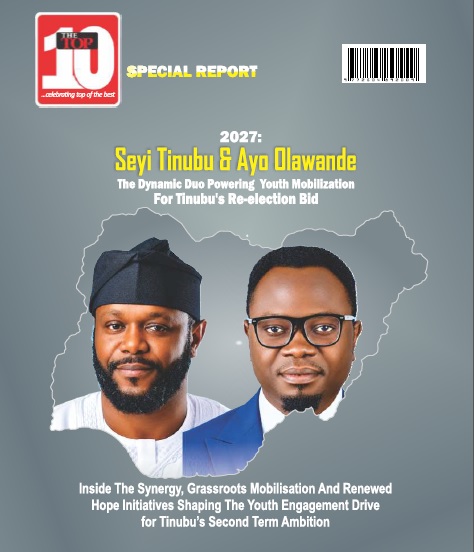
Inside the synergy, grassroots mobilisation and Renewed Hope initiatives shaping the youth engagement drive
By Tony Iji
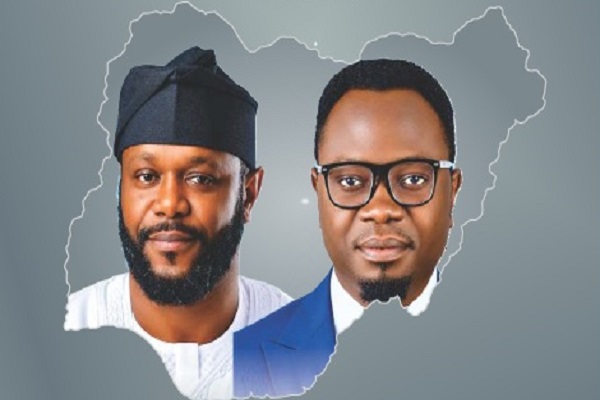
As Nigeria moves towards the 2027 presidential election, youth mobilisation is emerging as a significant feature of the political contest. Two names increasingly associated with the pro-Tinubu youth engagement effort are Seyi Tinubu, who leads the CityBoy Movement, and Hon. Ayo Olawande Wisdom, Minister for Youth Development. Their respective roles—grassroots organisation on one side and government-led youth programmes on the other—form the central theme of a strategy aimed at connecting the administration’s Renewed Hope message with young Nigerians.
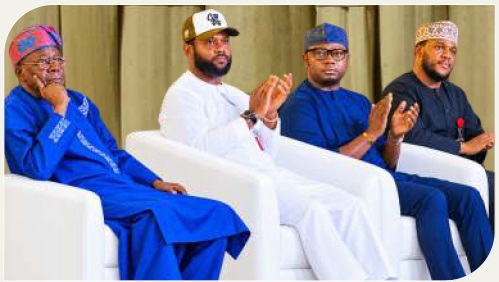
The significance of this partnership was underscored at “An Evening with the Original City Boy,” organised by the CityBoy Movement at the Banquet Hall of the Presidential Villa, Abuja. At the event, President Bola Ahmed Tinubu publicly praised Seyi Tinubu and the young people working with him, while acknowledging the importance of youth participation in the country’s future. His remarks gave the movement a prominent presidential platform as political mobilisation for 2027 gathers momentum.
“Permit me a personal moment for my son, Seyi. I’ve watched what you started with City Boy, and I got some calls within the last few weeks asking me what Seyi is running for. I said he’s running after his father,” the President said.
Tinubu went on to commend the movement’s approach to engagement, saying: “You and your young colleagues, you are investing your time effectively. We are with you. Thank you. You did it humbly. You did not ask for a title or an office. You went to the young people, your age groups, your group. You listened to them and you organized them. I am proud of all of you.”
He also urged Seyi and his colleagues to raise the bar of service: “Go further. Serve harder. Set an example that your own children, my grandchildren, will be proud to follow.” Addressing the wider CityBoy Movement, which included Minister Ayo Olawande at the event, he added: “Thank you for standing with me… I am very proud of you… You will not be left behind.” The President’s broader message was clear: “The future of this country does not belong to me or to people of my generation, it belongs to the young people.”
The comments offer an important lens through which to assess the emerging Seyi Tinubu–Olawande partnership. They also set a challenge: political mobilisation must be matched by sustained engagement, credible opportunities and tangible improvements in the lives of young people.
SEYI TINUBU: THE GRASSROOTS BRIDGE-BUILDE
Seyi Tinubu, Chairman of Loatsad Promomedia and Founder of the Noella Foundation, is presented by supporters as a key bridge between the Presidency and young people outside formal government. His approach centres on meeting young Nigerians in their communities, listening to their concerns and using networks, outreach and personal engagement to build connections with the administration.
CityBoy Movement: From Slogan to Structure
The CityBoy Movement is described in the supplied material as having expanded across all 36 states and the Federal Capital Territory, with activity extending to local government and ward-level structures. Its coordinators, youth ambassadors, street activations and community outreach efforts are intended to give the movement a visible presence in different parts of the country. The additional material says the movement is targeting 10 million votes for President Tinubu in 2027; that figure is a stated mobilisation ambition, not a verified electoral outcome.
Grassroots Outreach and Empowerment
The main story highlights Seyi Tinubu’s Ramadan Iftar tour across Northern states, medical outreaches, support for hospital bills, assistance to young entrepreneurs, distribution of food palliatives and educational materials, and business grants. It also describes engagement with students, informal-sector workers, skit makers, technology entrepreneurs and other youth groups. Such activities, where sustained and transparently documented, can help political organisers build relationships beyond rallies and online campaigns.
Engagement with Youth Stakeholders
The feature also points to engagement with student and youth bodies, including the National Association of Nigerian Students (NANS), the National Youth Council of Nigeria (NYCN), Arewa youth groups, Ohanaeze youth groups and Niger Delta youth groups, alongside entertainers, influencers and technology founders. These relationships are intended to widen the movement’s reach across regions, professions and digital communities.
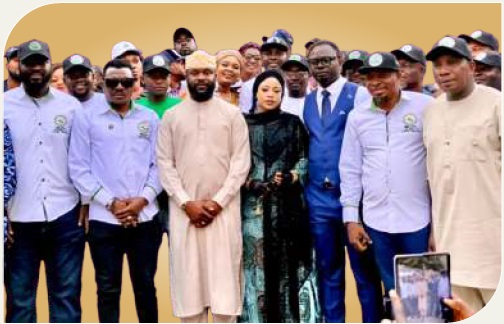
AYO OLAWANDE: THE POLICY AND INSTITUTIONAL ARM
If Seyi Tinubu’s role is primarily associated with movement-building and community engagement, Hon. Ayo Olawande Wisdom’s contribution is framed around government programmes and institutional channels for youth development. As Minister for Youth Development, he occupies a position from which youth concerns can be connected to policy, skills initiatives, economic inclusion and participation in governance.
Nigerian Youth Academy and Skills Development
The main material identifies the Nigerian Youth Academy (NiYA) as a major component of the ministry’s youth development agenda, with a stated target of reaching seven million young people through digital skills, entrepreneurship and vocational training, alongside access to grants. The programme’s significance will ultimately depend on delivery: how many young people enrol and complete training, the quality and relevance of the skills provided, and whether participation leads to jobs, enterprise growth or other measurable outcomes.
Youth Confab and Dialogue
The story also cites the 30-day National Youth Confab in 2025 and town-hall engagements across the six geopolitical zones. These initiatives are presented as channels for young Nigerians to communicate their concerns to government and contribute to policy discussions. Continued feedback and visible follow-through on recommendations will be important to sustaining confidence in the process.
Economic Inclusion and Participation in Governance
Other initiatives cited in the material include a Youth Help Desk, efforts to strengthen the skills component of the National Youth Service Corps (NYSC), Youth Investment Fund disbursements, the reactivation of youth centres and partnerships with the private sector to create employment opportunities. The feature also points to the appointment of young people as aides, board members and agency heads. Transparent reporting on beneficiaries, funding, geographic reach and results would help the public assess the impact of these interventions.
THE PERFECT SYNERGY: MOBILISATION MEETS DELIVERY
The central argument for the Seyi Tinubu–Ayo Olawande partnership is that their roles are complementary. Seyi’s CityBoy network seeks to organise young people, maintain contact with communities and create a visible political movement. Olawande’s ministry, by contrast, has access to public programmes and institutional mechanisms intended to address skills, participation and economic inclusion.
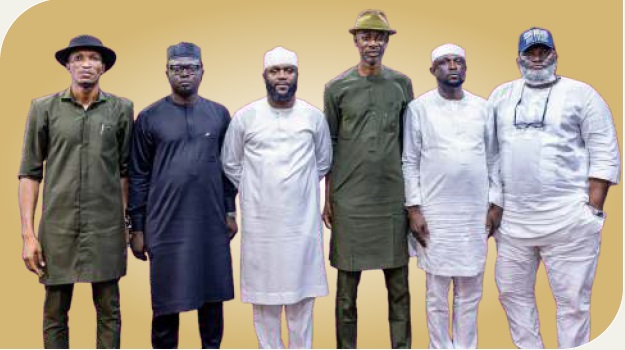
In this model, one arm mobilises from outside government while the other operates within government. The movement can provide a channel for listening and outreach; the ministry can, where programmes are effectively implemented, connect youth priorities with public policy. The strength of the relationship will depend not only on political visibility but also on whether the two tracks reinforce one another without confusing partisan mobilisation with the government’s broader responsibility to serve all young Nigerians.
The President’s remarks at the CityBoy event lend the partnership political visibility. His praise for the movement’s humility, listening and organisation, together with his assurance that young people would not be left behind, places an expectation on its leaders to demonstrate service and results. His statement that the country’s future belongs to young people also provides a wider standard against which youth-focused policies and initiatives can be judged.
THE 2027 TEST: TRUST, OPPORTUNITY AND RESULTS
The youth vote is not a single, uniform bloc. Young Nigerians differ by region, education, employment status, economic circumstances and political outlook. While organised movements, stakeholder engagement and social-media visibility can help a campaign reach new audiences, electoral support will also be shaped by lived experience—especially jobs, the cost of living, access to education and training, security, opportunity and trust in public institutions.
For the Seyi Tinubu–Olawande partnership, the opportunity is to connect political participation with practical benefits and credible dialogue. The challenge is to show that promises of skills, grants, jobs and inclusion translate into accessible programmes and measurable outcomes. The stated ambition of mobilising 10 million votes for Tinubu is therefore best understood as a campaign target whose real test will come at the ballot box.
The Villa event has placed the duo and the CityBoy Movement firmly within the conversation about the administration’s youth strategy for 2027. But presidential commendation is a starting point, not a substitute for public accountability. Sustained listening, transparent programme delivery and meaningful opportunities for young people will determine whether the movement’s momentum can be converted into durable trust.
As the 2027 contest approaches, the defining question is not simply how many young people can be mobilised, but whether they feel heard, included and able to build a better future. Seyi Tinubu and Ayo Olawande have been positioned as two important figures in the effort to answer that question for the Tinubu campaign. Their ultimate test will be whether the synergy they represent can turn its promise into demonstrable results.