- What he brings to the table
- The expectations from him
- 10 major facts to know about him
By The Top10 Reports
At a time when size, scale and strategic agility increasingly determine the strength of financial institutions, the leadership transition at United Bank for Africa (UBA) Plc is coming with an unmistakable message: continuity may be important, but experience must be matched with the capacity to navigate the next phase of growth.
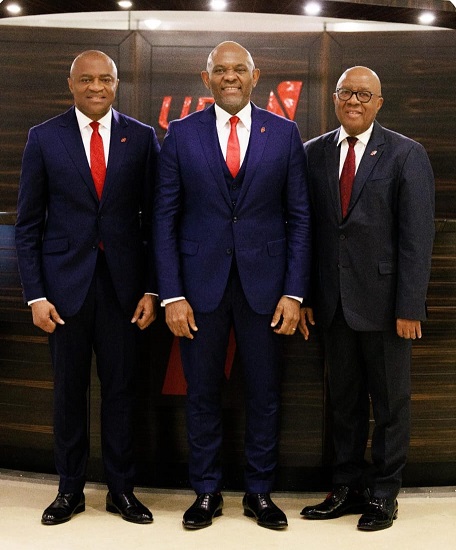
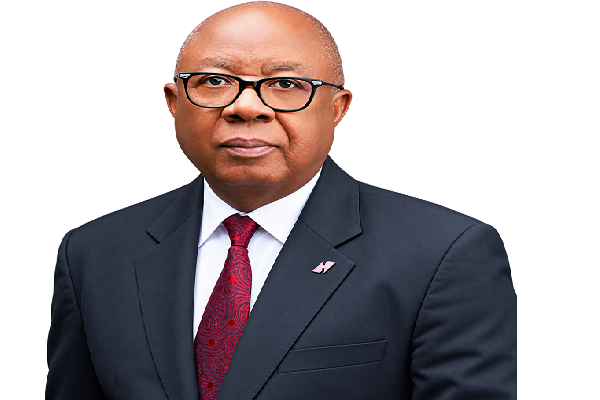
On August 21, 2026, Emmanuel Nwabuikwu “Emma” Nnorom assumes the chairmanship of UBA, succeeding Tony Elumelu, who is stepping down after completing the maximum 12-year tenure permitted for non-executive directors under Central Bank of Nigeria (CBN) corporate governance guidelines. The UBA Board approved Nnorom’s appointment at its meeting of July 6, 2026.
The transition is significant not simply because one prominent chairman is making way for another, but because Nnorom is hardly an outsider coming into an unfamiliar institution. His professional history is deeply intertwined with UBA. Before joining the bank’s Board as a Non-Executive Director in 2024, he spent more than eight years in executive management, rising through several strategic positions and eventually becoming Managing Director/Chief Executive Officer of UBA Africa.

That institutional familiarity could prove particularly valuable as UBA consolidates the gains of the Elumelu era and seeks to deepen its position as a truly pan-African financial institution.
A new chairman, but not a new face
Nnorom arrives at the top of UBA’s boardroom with a rare combination of institutional knowledge, executive experience and exposure to different sectors of the Nigerian economy.
His UBA career saw him serve as Group Chief Operating Officer, Executive Director in the Group Executive Office, Executive Director of Finance, Executive Director of Risk and Managing Director/CEO of UBA Africa. In the latter role, he was involved in coordinating the bank’s operations across several African markets and strengthening its pan-African strategy.
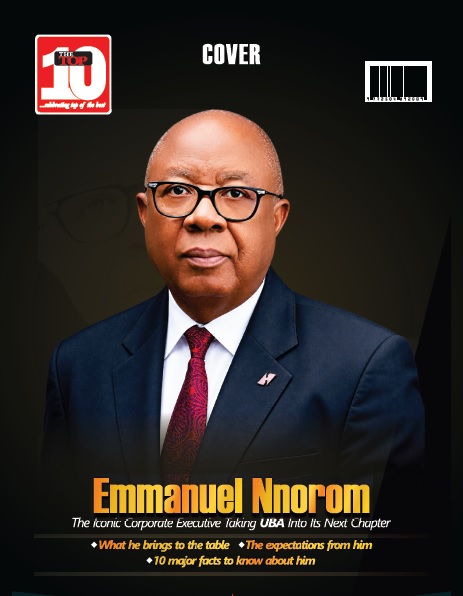
His experience extends beyond banking. After leaving UBA, he became President and Chief Operating Officer of Heirs Holdings before serving as President and Chief Executive Officer of Transnational Corporation Plc (Transcorp). At Transcorp, he oversaw businesses spanning power, hospitality, agriculture and energy. He subsequently returned to Heirs Holdings, where he has served as Group Chief Executive Officer, overseeing investments across financial services, power, healthcare, hospitality, real estate, energy and technology.
This breadth is one of the strongest arguments for his appointment

Nnorom is not coming to UBA with only a banking résumé. He brings experience in investment management, energy, hospitality, healthcare, infrastructure, real estate and corporate governance. That cross-sector exposure could give him a broader perspective on the changing needs of businesses and consumers across the markets where UBA operates.
What Nnorom is bringing on board
- Deep institutional knowledge
Perhaps his biggest immediate advantage is that he understands UBA from the inside.
Having previously occupied senior executive positions within the bank and subsequently served on its Board, Nnorom understands its culture, systems, people, opportunities and challenges. He therefore does not need to spend his early tenure learning the institution from scratch.
That familiarity should allow him to concentrate more quickly on strategic questions around growth, competitiveness, governance, innovation and long-term sustainability. - Four decades of corporate experience
Nnorom has spent more than 40 years across banking, finance, auditing, operations and corporate governance. His career has included senior positions in several financial institutions and major Nigerian corporations.
At a time when financial institutions face increasingly complex regulatory, technological and economic environments, such experience offers UBA the benefit of seasoned judgement. - Pan-African understanding
Nnorom’s previous leadership of UBA Africa is particularly relevant to the bank’s present ambitions.
UBA operates across more than 20 African countries and has international operations in the United Kingdom, United States, France and United Arab Emirates. The bank also serves more than 50 million customers globally and employs about 25,000 people across the Group.
Managing such a geographically diverse institution requires more than conventional banking knowledge. It demands an understanding of different regulatory environments, markets, cultures and economic realities.
Nnorom has already operated within that environment. - Strong financial and risk-management credentials
His career has included responsibility for finance and risk at UBA, while his professional foundation as a chartered accountant gives him a strong grounding in financial discipline.
He is a Fellow of the Institute of Chartered Accountants of Nigeria (ICAN) and an Honorary Member of the Chartered Institute of Bankers of Nigeria (CIBN).
For a financial institution of UBA’s scale, the chairman’s understanding of risk, governance, capital discipline and institutional sustainability will remain critical. - A broader investment perspective
His years at Heirs Holdings and Transcorp have exposed him to businesses outside conventional banking.
That experience matters because modern banking is increasingly connected to the wider economy. Banks finance infrastructure, energy, businesses, healthcare, technology, real estate and consumer activity.
Nnorom’s exposure to these sectors gives him a perspective that extends beyond the balance sheet of a bank to the real economy that the bank finances.
What will be expected of the new UBA Chairman?
The immediate expectation will be continuity with improvement.
Nnorom inherits an institution that has been transformed into a major pan-African banking group under Elumelu. The challenge, therefore, is not to reinvent UBA for the sake of reinvention, but to protect the gains already achieved while identifying the next opportunities for growth.
Sustaining UBA’s pan-African momentum
UBA’s identity as “Africa’s Global Bank” has been built around its presence across the continent and its connections to international financial centres. Nnorom will be expected to help sustain and deepen that position.
His previous experience leading UBA Africa gives him an important foundation for this assignment.
Strengthening governance and institutional resilience
As chairman, Nnorom’s central responsibility will be board oversight of strategy, governance and long-term growth, while working with management to achieve the bank’s business objectives.
The expectation will be for a boardroom culture that combines growth ambition with strong risk management, accountability and regulatory discipline.
Driving long-term shareholder value
Nnorom has already signalled that long-term value creation will be central to his agenda.
Responding to his appointment, he said he was conscious of the legacy he was inheriting and looked forward to working with the Board, management and staff across UBA’s markets to sustain the bank’s momentum and continue delivering long-term value to shareholders, customers and stakeholders.
That statement offers a useful window into the philosophy expected to define his tenure.
Preserving the customer-centric character of UBA
With more than 50 million customers globally, UBA is no longer simply a Nigerian bank with foreign subsidiaries. Its scale requires a consistent approach to customer experience, digital banking, financial inclusion and service delivery across multiple markets.
The new chairman will therefore be expected to help the institution remain competitive as banking becomes increasingly digital and customer expectations continue to evolve.
Building on, rather than overshadowing, the Elumelu legacy
Perhaps the most delicate part of the transition is succeeding a chairman whose tenure has been closely associated with UBA’s transformation into a pan-African institution.
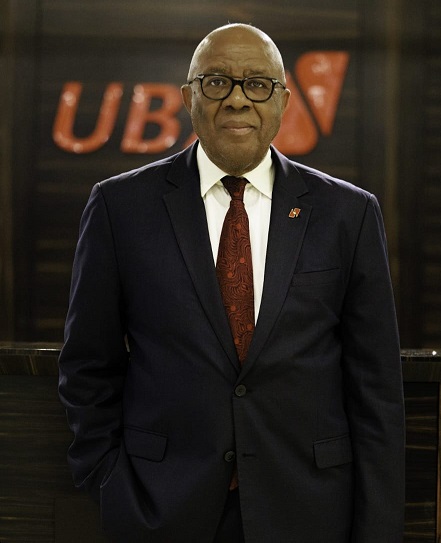
Elumelu himself expressed confidence in Nnorom, describing him as a leader of integrity, experience and sound judgement.
The task before Nnorom is consequently not to imitate his predecessor, but to build on the institutional foundation he inherits and give UBA a clear direction for its next phase.
Why the appointment matters
The choice of Nnorom represents a strong preference for experienced institutional leadership at a critical stage of UBA’s evolution.
His career has taken him from banking and accounting into corporate management, investment leadership and boardroom governance. He has worked within UBA, left to lead major businesses, managed investments across several industries and returned to the UBA Board.
That trajectory means his appointment can be viewed as both a return and a progression.
He returns to an institution he knows deeply, but he does so with additional experience accumulated outside the bank.
In practical terms, that could be one of the defining advantages of his chairmanship.
10 major facts to know about Emmanuel Nnorom
- He officially becomes UBA Group Chairman on August 21, 2026.
Nnorom takes over from Tony Elumelu, whose chairmanship ends after the completion of the maximum 12-year tenure permitted for non-executive directors. - He has more than four decades of corporate experience.
His career spans banking, finance, auditing, operations, investment management and corporate governance. - He is a UBA veteran.
Before returning to the bank’s Board as a Non-Executive Director in 2024, he spent more than eight years in UBA executive management. - He served as CEO of UBA Africa.
In that role, he supervised the bank’s African operations and contributed to its pan-African expansion strategy. - He has held several top executive positions at UBA.
His roles included Group Chief Operating Officer, Executive Director for Finance, Executive Director for Risk, Executive Director in the Group Executive Office and Managing Director/CEO of UBA Africa. - He previously led Transcorp.
Between 2014 and 2017, he served as President and Chief Executive Officer of Transnational Corporation Plc, overseeing businesses including power, hospitality, agriculture and energy. - He has headed Heirs Holdings.
He has served as Group Chief Executive Officer of Heirs Holdings, overseeing a diversified investment portfolio covering sectors including financial services, power, healthcare, hospitality, real estate, energy and technology. - He is a chartered accountant and banking professional.
Nnorom is a Fellow of ICAN and an Honorary Member of CIBN. - He has an Oxford connection.
He attended Templeton College, Oxford, where he completed executive leadership and management programmes. - He was born in 1958.
Emmanuel Nwabuikwu “Emma” Nnorom was born on April 7, 1958, giving him a professional career spanning several decades.
The road ahead
The significance of Emmanuel Nnorom’s appointment lies in the convergence of experience and timing.
He inherits a UBA that has grown into a major African financial institution, with operations across the continent and international markets, more than 50 million customers and a workforce of about 25,000.
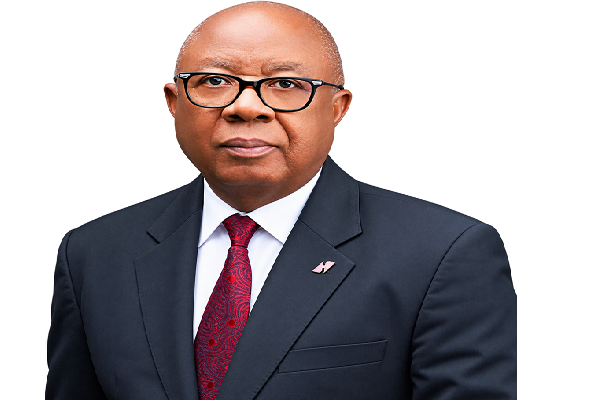
His assignment is therefore substantial: preserve institutional strength, strengthen governance, support sustainable growth, deepen UBA’s pan-African reach and help the bank remain relevant in an increasingly competitive financial ecosystem.
But perhaps his greatest asset is that he understands both the institution and the wider business environment in which it operates.
He knows UBA from the executive suite. He knows African banking. He understands investment management. He has led a major Nigerian conglomerate. He has operated across multiple industries. And he brings more than four decades of professional experience to the boardroom.
For UBA, the beginning of the Nnorom era is therefore less about starting afresh than about building the next chapter on a strong institutional foundation.
His own words capture the challenge best: he is “deeply conscious of the legacy” he inherits and intends to sustain the bank’s momentum while delivering long-term value to its shareholders, customers and stakeholders.
For one of Africa’s most recognisable banking brands, that is the promise — and the expectation — that comes with the arrival of Emmanuel Nnorom.