By Our Reporters
Preface: In the beginning

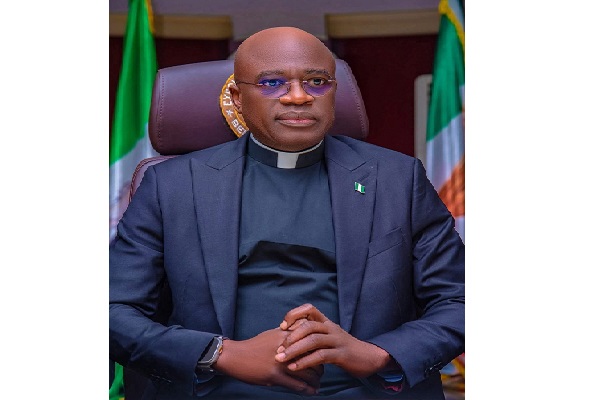
The circumstances in which Rev. Fr. Dr. Hyacinth Alia became the Governor of Benue State in 2023, how he has been piloting the affairs of Benue State in the last two and half years, and how the two factors are shaping the fate of his immediate political future make an interesting story.
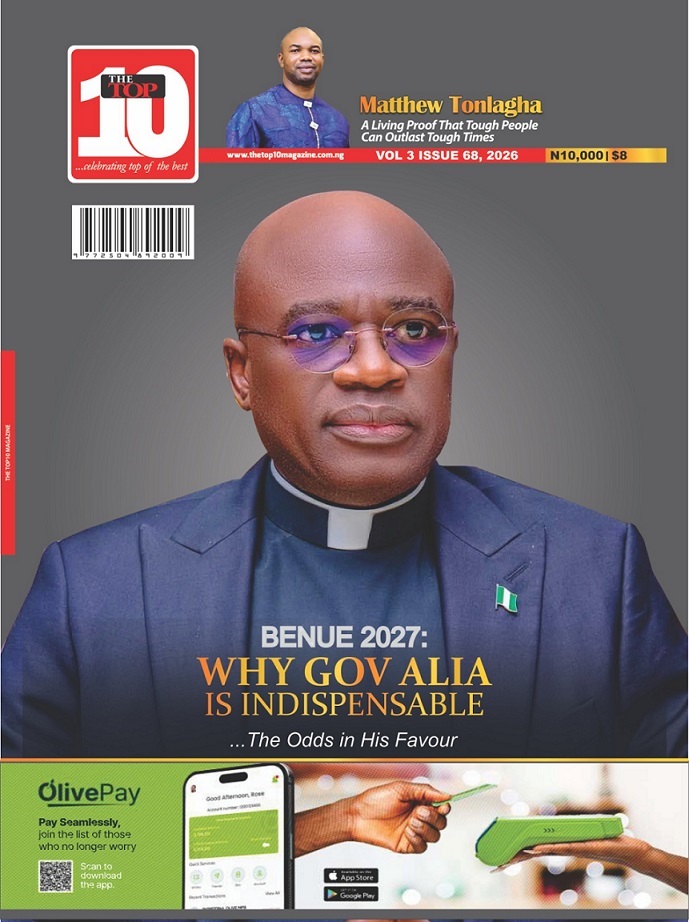
By the time the 2023 general elections loomed, Benue State had been ruled for 20 out 24 years since 1999 by the Peoples Democratic Party (PDP) and was becoming, in the perception of the public, the face of everything that was ugly with politics and governance in the state. The main opposition party then, the All Progressives Congress (APC) which enjoyed a stint of only four years out of 20 in Benue State Government House (2015 – 2019) was desperate to recapture the state. Most of the experienced political heavyweights in its fold who were aspiring to be Governor had their roots in PDP, such that they and their counterparts in PDP were like two faces of the same coin. The APC reasoned that the electorate would not spot the difference between any of them and the PDP candidate at the polls if fielded. Such a match up was bound to give the incumbent ruling party an advantage – especially of incumbency.
APC leadership and strategists went to work. They felt that in order to be able to win the support of the people, APC needed a flag bearer whose face represented a clear and radical break from the ugly past. They found their man in Father Alia, a popular Catholic cleric who had probably never attended a political party meeting prior to his draft. While his name rang a bell in the Christian Community in Benue State, he was almost completely unknown in political circles and, therefore, stood no chance of being associated with or tainted by the ugly game. That background was primed to be a huge contrast and electoral advantage.
Father Alia was a typical Catholic Priest – well educated and well exposed by virtue of his numerous pastoral postings to various parishes and assignments within and outside the country. Typically, too, having sworn to the oath of celibacy, fidelity, self-denial (poverty), etc. during his priestly ordination, Rev. Fr. Alia, lacked the usual war chest (financial resources) to prosecute an election to such a high profile political office as the Governorship in a highly monetized electoral environment like Nigeria’s. But not to worry, the APC leadership must have reasoned, we will take care of that.
But what Father Alia lacked in terms of political exposure, he more than compensated for in form of numbers – following – which ultimately translates into votes, exactly what the party needed for victory in the election. Another big electoral asset. Whether by design, coincidence or divine calling, Alia who had bagged a Master’s and Doctorate in Biomedical Ethics from Duquesne University, Pennsylvania (2004, 2005), had established himself as a crowd puller through his prayer healing ministrations, using the water brought by health seekers and blessed by him (Holy Water in Catholic parlance). He attracted thousands of the sick, the poor, the bereaved and others seeking all forms of healing to his spiritual healing services in the parishes where he served. That crowd and the huge population of the Catholic faithful in Benue state generally represented an equally huge political capital which the APC leadership identified and cashed in on. The crowd constituted the support base from which to harvest massive number of votes, the leadership reasoned. And when Father Alia’s name began to be linked with the Governorship of the state on APC’s platform, the Benue political landscape became electrified as the people got nostalgic about Rev. Fr. Moses Adasu (now late), also a Catholic priest, who had distinguished himself as the state Governor in less than three years in the early 1990s. They were excited about the prospect of a repeat performance by another Governor of Father Adasu’s ilk. The crowd around Father Alia exploded wherever he went the moment he formally declared his aspiration to contest for the Governorship. Party men jostled to take positions of advantage in his team while the ordinary man in the street celebrated the prospect of having another action Governor who would make things better for the State and its people.
It was at this point that the state leadership of APC, led by Senator Dr. George Akume, brushed aside the already established Governorship aspirants of the party and did everything possible for Father Alia to win the APC gubernatorial ticket and eventually the main election. Once he became the APC candidate, a new but informal, yet very strong movement, surfaced to drum support for Father Alia, in the manner of Obi-dient Movement (for Peter Obi, the Labour party candidate in 2023 presidential election). Known as ‘Yes Fada’ (Yes Father), the unstructured organization resonated with the people and drew massive following across party lines, among civil servants, teachers, traders, professionals, men and women, young and old, bound only by the common desire to see to the enthronement of Father Alia as Governor, the one candidate they believed was capable of building a New Benue State.
True to the projections of the APC leadership/strategists and expectations of their supporters, Father Alia defeated his nearest rival, Engr. Titus Uba, the candidate of the ruling PDP with 473,933 votes, which was more than double the 233,913 scored by the latter.
Father Alia’s popularity was also the propelling force behind the huge success recorded by APC in Benue state the other elections – Presidential as well as National and Assembly – in the 2023 general elections. The other APC candidates leveraged on the “Yes Fada” mantra to win their elections.

Father Alia was sworn-in as Governor on May 29, 2023. But the victory celebration hardly died down before disagreement arose between the Governor and Senator Akume who, in the meantime, had been appointed as the Secretary to the Government of the Federation (SGF), one of the most powerful offices in the Federal Government establishment.
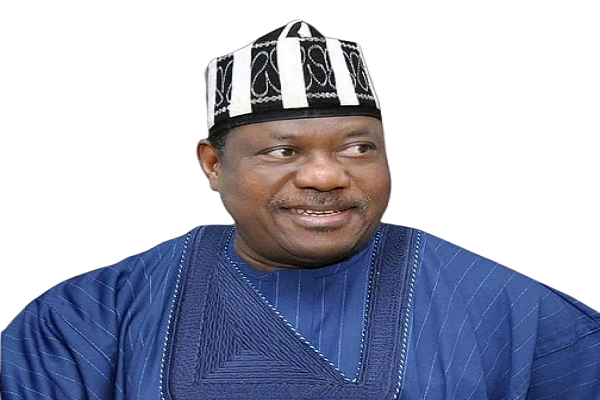
Sen. George Akume,
Secretary to the Govt. of the Federation (SGF)
Reports said Akume insisted on exercising control over the affairs of the state Government and and retaining the leadership of APC in the state on the ground that he paved the way for Father Alia to be Governor. The new Governor refused to grant these wishes on many grounds. According to inside sources, the Governor’s position was (and is) that as the ultimate holder of the people’s mandate he should have the last say on strategic state matters, including appointments, because the buck stops at his table. Secondly, he argued that the mandate given to him and APC was a vote for doing things differently from the usual ways of the politicians in order to achieve different and better results than his predecessors. He made it clear that since one can’t be doing the same things over and over again and expect a different result it would no longer be business, or more appropriately, politics as usual. Father Alia reportedly expressed his gratitude to Senator Akume for his role in his emergence as Governor but stressed the need for the two of them to forge a relationship of complementarity and mutual respect rather than that of master-servant. Finally, the Governor made a case for the need for him to be the party leader in the state so that he and his party men and women could work together seamlessly in the discharge of the mandate given to him and APC by the Benue people. He said that that consideration was the wisdom behind the policy of political parties to hand over their national and state leaderships to the President and Governors, respectively, citing the example of Senator Akume himself when he was the PDP Governor of Benue State for eight years.
But the SGF and his loyalists reportedly dismissed Governor Alia’s arguments as acts of ingratitude, disloyalty and arrogance. They labeled him variously as a man who was out to bite the finger that fed him; one that was throwing away the ladder with which he climbed to the top, or cutting the bridge on which he walked across the river.
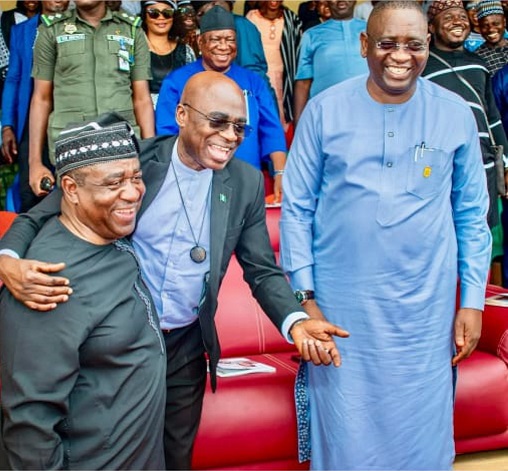
Gov. Alia with Sen. Suswam & Sam Ode
They resolved to teach the new Governor some political lessons before he got settled, entrenched and too powerful. This resolve led to an open stand-off between supporters of the two APC helmsmen during the inuaguration of the current 10th Benue State House of Assembly members on June 5, barely a week after the Governor’s inauguration. Each of them lined up his own set of members to be supported in the election of the Assembly’s Principal Officers. Following an open fracas between the rival loyalist lawmakers, the Governor had his way on the day, took control of the House (through his loyal members) and has been consolidating his hold on the Assembly ever since.
The battle front later shifted to the state APC to determine who controls its structures and the secretariat. The party in the state became factionalized behind the two leaders with all reconciliation efforts by respected statesmen, Tiv traditional rulers, national leadership of APC, the presidency and judicial pronouncements proving abortive. At the moment, the Governor holds the ace as his man, Hon. Benjamin Omale, and his State Executive Committee, is in charge at the State party Secretariat. What is confusing, however, is that the national leadership of APC appears to be dealing simultaneously with the Senator Akume’s factional leader, Hon. Austin Abah. For instance, during the recent e-membership registration, materials were reportedly shared to representatives of the two factions. For the current congresses of the party in the state the Akume faction claimed to have also collected the materials from the national secretariat.
Observers see the apparent peace prevailing in APC at the moment as that of the graveyard: a deceptive, forced calm that is masking underlying, intense, or unresolved tension in the party in the state. The battle line remains drawn as recent reports indicate that the Akume faction has not yet relented on its resolve to teach Governor Alia the bitter political lesson of his life. Speculations of clandestine schemes, plots, and conspiracies to deny the Governor a second term ticket in APC or any other party are tick in the air. It remains to be seen how all these pans out in the build up to the 2027 general election. What is clear, however, is that Senator Akume and Governor Alia are, for now, held together by a fragile trade – their common loyalty, allegiance and commitment to President Bola Tinubu and his reelection in 2027.
How has all this affected Governor Alia’s governance, performance rating and prospects for reelection in 2027? The following segments provide the answers.
Governor Alia’s governance style
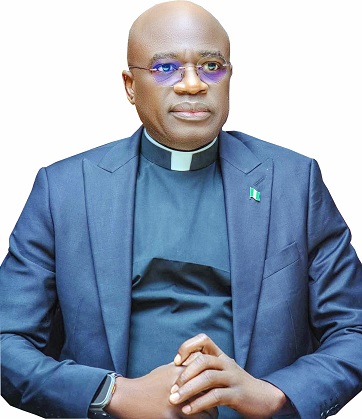
One of the factors that has shaped Governor Alia’s performance and will ultimately have a significant impact on his chances of re-election is his governance principles-cum-leadership style. Armed with a vision for a new and better Benue State, he crafted a blend of governance style, policies and programmes that took into cognizance the critical challenges facing the state, his own background and beliefs, as well as the needs and expectations of the people. His vision is driven through participatory, consensus-driven, accountable, transparent, responsive, effective, efficient, equitable, and inclusive governance and adherence to the rule of law.
He deploys courage, clarity, and conviction to confront head-on the multiple challenges of the state that had often been trapped in the web of politics without purpose, where excuses replaced action and inertia masked as strategy. He brought into governance what Benue State had long desired but lacked: The will and the way.
Governor Alia represents a rare blend of moral strength, administrative discipline, and visionary focus. His emergence was not another mere political transition it was a people’s revolution, a collective sincere yearning for transformation.
Since assuming office, he has proven that leadership is not merely about occupying a seat of power, but about having the political will to do what is right and the way to do it effectively to meet the yearnings of the people.
Governor Alia has demonstrated the inner fire, the burning desire, the determination to serve selflessly, to make tough decisions, and to stand firm in the face of resistance. The will to transform the governance system in Benue State has been evident in his bold steps to restore order, transparency, and accountability in public service. He has harped on the importance of partnership with the Federal Government and development partners to drive more development and deliver more legacy projects, an opportunity his predecessors failed to take advantage of. This synergy has proven to be a significant advantage to the state, as it has been unlocking opportunities and resources that might otherwise have been inaccessible. It’s a clear example of how inter-governmental collaboration and other partnerships can accelerate development and bring about meaningful change for the populace.
This positive relationship has transformed the dynamics of governance in the state. By aligning with the federal agenda for progress, the Benue State Government has been able to leverage support and expertise, leading to a more efficient and impactful implementation of its policies and projects. Governor Alia’s strategic partnerships prioritize the welfare of the people above every other consideration.
Also, whereas in the past, administrations tolerated laxity and truancy, Alia insists on commitment, dedication to duty and discipline; Where corruption thrives, he instills meticulous scrutiny. However, beneath that macho facade lies a heart full of compassion for those who work with him – the civil servants. The Governor has consistently demonstrated an unwavering commitment to the welfare of civil servants; ensuring regular payment of wages and pensions, a moral obligation long neglected. His courage to break away from misanthropic entrenched political patronage has unjustifiably unsettled some political elite who harbour the entilement mentality, but endeared him to the people. In just over two years, Governor Alia has succeeded in positioning himself as a leader who places the interest of the masses above personal gain or partisan loyalty.
He has adopted an inclusive leadership style that transcends all societal divisions such as age, class, background, religion or status. Unlike previous administrations that were often criticised for favouring select political allies, classmates, or religious affiliations, Alia has embraced diversity. His government accommodates all those who has something positive to offer the state, regardless of their political background. His administration has ensured that young individuals, regarded as essential to a dynamic economy, are not overlooked.
Also, what makes Governor Alia’s leadership remarkable is not just what he is doing, but how he is doing it with sincerity, humility, and a sense of mission. He listens to the people, acts decisively, and measures progress not by politics but by impact.
For the first time in many years, Benue’s citizens are witnessing a government that works with purpose and direction. The cynicism of yesterday is giving way to confidence today. There is a renewed belief that the state can rise above its challenges of insecurity and underdevelopment and reclaim its rightful place as the food basket of the nation.
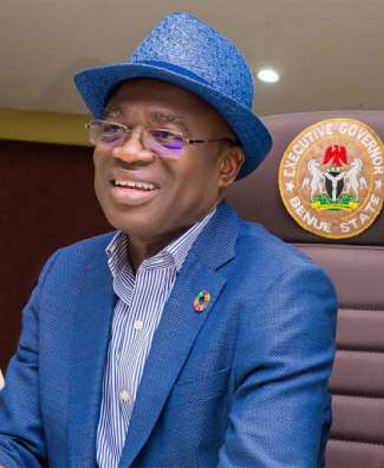
Indeed, in Alia, Benue has found both the will to change and the way to succeed. A governor who dreams big but acts wisely; who speaks less but delivers more. He is not a man of political rhetorics, but a leader who allows his actions and results to speak for him. That’s why, in order to translate his vision into tangible reality the Governor, early on, produced a document on his development blueprint for the state known as “Strategic Development Plan,” focusing on poverty reduction, education, health care, staff welfare, digital skills acquisition, women and youth development, strengthening the agricultural sector to boost food security in Benue State, among others. He has been meticulously implementing the blueprint by deploying resources with precision for investment in all the sectors. Through his reforms, the civil service is becoming more efficient, public infrastructure is being revived, and hope is being restored in communities once forgotten.
His emphasis on value-for-money projects reflects a shift from wasteful spending to purposeful development. The Alia administration’s interventions in agriculture, a key pillar of Benue’s economy show strategic foresight. By empowering farmers with inputs, tools, and access to markets, he is paving the way for economic independence and food security. His government’s focus on youth empowerment, skills acquisition, and entrepreneurship further underscores his commitment to building a self-reliant generation. Overall, Governor Alia’s performance scorecard presents refreshing hope that Benue State can be great again. But does the score card say?
Governor Alia’s performance scorecard
Makurdi: From glorified village to modern city
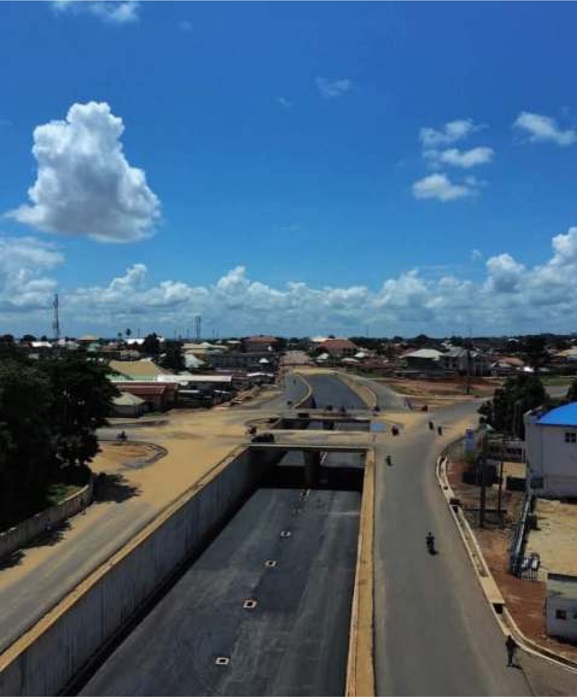
No one visiting Makurdi for the first time in the last three years can fail to notice the massive infrastructure transformation that has taken place in the Benue State capital. Hitherto described as a glorified village for its lack of modern facilities, Makurdi now wears a brand-new identity of a modern city courtesy of its retouch by the Alia administration in the last two-and-half years. All major and many small as well as corner streets have been brightly illuminated at night courtesy of the unblinking street lights installed by the Alia administration. The beautification of Makurdi at night by street lights has become a marvel and a thing of joy to residents long accustomed to gloomy dark nights. As a result, all-light business, commuting and social life have been on the bounce in the central areas of the new city with night time becoming almost indistinguishable from day and nocturnal criminal activities on the wane. The provision of this modern infrastructure is not limited to the state capital. It is cascading down to other urban centres and rural settlements in the state.
The radical transformation of Makurdi’s nighttime outlook was not just one of the first accomplishments of the Governor, it typifies the massive infusion of infrastructure and other life-lifting projects and programmes that have become the order of the day under his administration.
Roads and related infrastructure
In less than three years, Governor Alia has successfully constructed or is constructing nearly 40 roads within the Makurdi metropolis and other parts of the state, including two underpass projects in Makurdi and Gboko (with the one at Otukpo under way) aimed at reducing traffic congestion and improving commerce, commuter comfort and road safety.
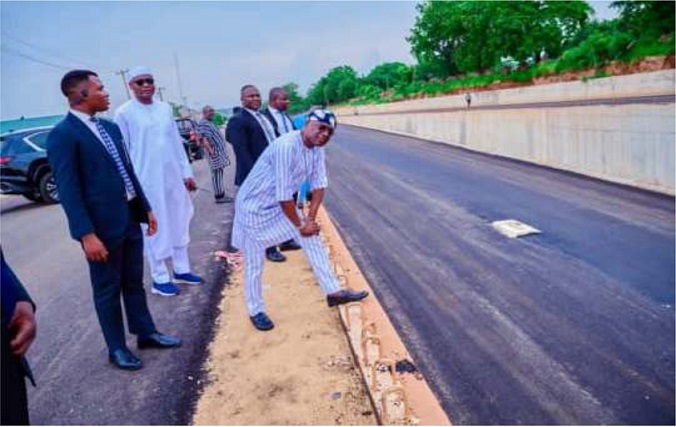
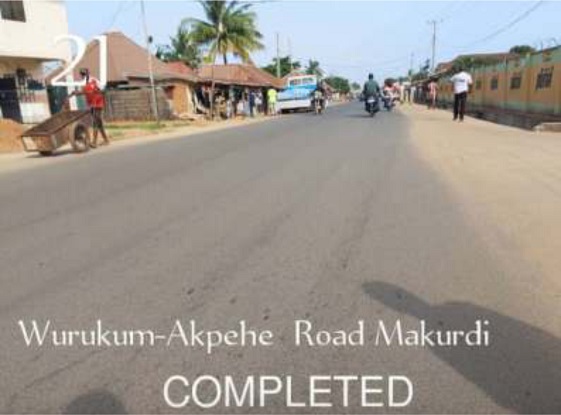
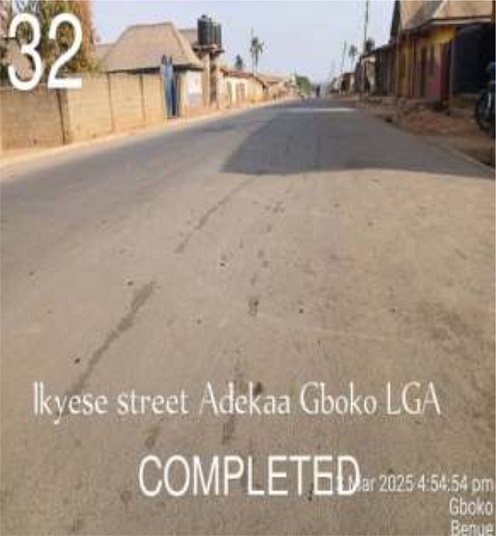
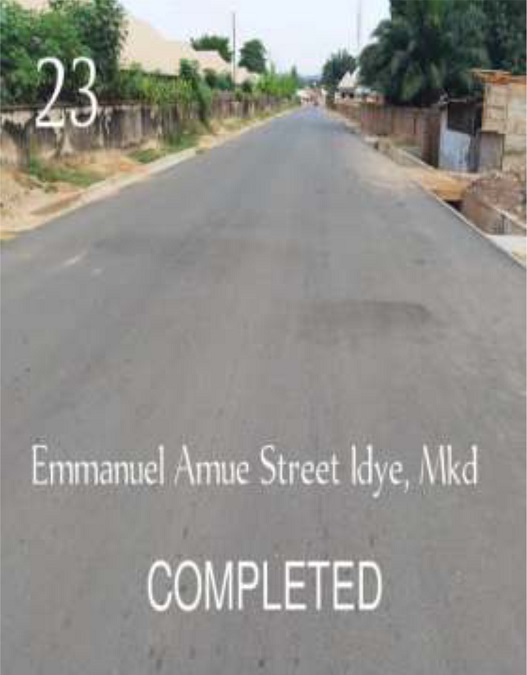
The road infrastructure being developed in Makurdi by the Alia administration is significant not just for their numbers or length but more so because of the quality and wide network of coverage of the roads. Unlike roads provided by previous administrations, the Alia roads are thick, nylon-tarred and provided with proper drainage channels to enable them withstand years of heavy rainfall. And they are everywhere – from the elite settlements of the GRA and Government quarters, to the slum and hitherto little-known settlements such as Wurukum, Wadata, Iyakyo, Aihye, Kanshio, Idye, among many others. The latest phase of road work in Makurdi metropolis is the wholesome reconstruction of the failed major roads in the central area of the capital. Similar quality roads are also being constructed to link several Local Government Areas in the state with each other, some of which are being co-funded with the benefiting LGAs. Good examples in this category are the Awajir-Oju, Obagaji-Naka-Agagbe, and Otukpo-Ado roads which link seven LGAs cutting across the three Senatorial Districts. And very soon, the Local Government Areas in the state will wear a new look like Makurdi as the Government has earmarked five kilometers of roads each to be constructed in their headquarters.
Under Governor Alia, the Rural Access and Agricultural Marketing Project (RAAMP), a collaborative initiative between the Federal Government of Nigeria, the World Bank, and the French Development Agency (AFD) designed to improve rural road networks, enhance agricultural productivity, and develop agro-logistics hubs, has successfully constructed 77 culverts/ bridges across the 23 local government areas in Benue State. Some of them have been completed while about 40% are nearly completed. RAAMP has successfully acquired over 334 electric motorcycles for rural dwellers for purposes of local transportation and movement of persons. Survey and designs have been completed for the construction of 53 rural roads totaling 534 kilometers across the state. Constructionworks the roads is scheduled to commence immediately. These are some of the many benefits of Governor Alia’s faithful contributions of counterpart funds to partner and donor agencies since he came to power.
Education
Governor Hyacinth Iormem Alia last week announced, perhaps, one of the ambitious and potentially the most impactful programmes of his administration in the education sector: the introduction of free education for pupils in all government-owned public schools in Benue State from Basic One to Basic Nine. The policy is part of his administration’s commitment to ensuring that no child of school age is denied access to education. He explained that the decision was aimed at supporting poor and vulnerable families while building a strong educational foundation for the state’s future leaders.
Before that announcement, the Alia administration has been implementing policies to improve standards, including paying examination fees for students in government-approved public secondary schools sitting for WAEC and NECO examinations. He has also established the University of Agriculture, Science, and Technology at Ihugh in Vandeikya and opened a Benue State University campus at Adikpo (Faculty of Technology). He declared a state of emergency on primary education and has directed that storey buildings must form part of the infrastructure in government-owned primary schools. He also approved the employment of over 9,000 teachers to fill up the deficit in that sector. He has also introduced computer-based learning in basic education and sponsored students to national and international competitions, and increased enrollment in public schools through statewide advocacy campaigns. He has also revived nursery sections in public primary schools and promoted girl-child education in the communities that once lagged behind. The payment of salaries and allowances of teachers and lecturers in schools in tertiary educational institutions is now a norm and promotions have become a constant. In the basic education sub-sector, the Alia administration has successfully taken over 100 primary schools across the state under the Universal Basic Education Board initiative.
Healthcare
To improve health care services in the state, Governor Alia has rejuvenated the Benue State University Teaching Hospital and upgraded healthcare facilities across board in line with international best practices. His upgrade of medical care and activities at the Muhammadu Buhari Mother and Child Hospital, Makurdi, has reduced maternal mortality rates. His push for the establishment of a cancer center at the Benue State University Teaching Hospital, Makurdi, demonstrates his outstanding commitment to his drive for making Benue State a pharmaceutical hub to ensure that inadequate supply of drugs does not pose a health challenge to the people of the state. Governor Alia’s prompt and proper attention to medical staff welfare which has extended to students studying medicine in the faculty of medicine at the University is a unique demonstration of his attention to growth and development in the state. Recently, Governor Alia added a workforce of over 500 staff to the Benue State University Teaching Hospital to provide and sustain world standards in the medical sector. So far, 10 general hospitals across the 23 local governments in Benue State have been selected for upgrade to world standards, with the procurement and equipping of such hospitals.
Water supply, environment and sanitation
The Governor has made significant strides in improving water supply, with a focus on reviving abandoned projects and implementing new, large-scale infrastructure. His key achievements here include restoration of Otobi Water Works after paying ₦1.57 billion in debt owed for over 10 years to revive the Otobi/Otukpo Water Works. This project has restored water supply to Otukpo town and surrounding communities. Not too far away, the rehabilitation of the AdokaIcho Dam has begun, with the creation of a mini-substation to serve residents with clean water. The administration has also initiated plans for the rehabilitation of the Katsina-Ala Water Works to further extend clean water access.
The Governor inaugurated a 500,000-liter-per-day water treatment plant in Naka, Gwer West Local Government Area, aimed at providing clean water to residents and internally displaced persons. Construction work has commenced on a 230,000-liter-per-day waterworks facility at BSUTH to ensure constant water supply for patients and healthcare providers. Benue’s rural areas are also benefiting from the Governor’s water supply initiatives. Through partnerships with PEWASH and UNICEF, the administration has facilitated the construction of boreholes and toilet facilities across several local government areas, including Apa, Ohimini, Obi, Oju, Ado, and Ogbadibo.
The administration also provides emergency water services during the dry season by deploying water tankers to supply water to residents in affected areas to cushion the impact of water scarcity.
To enhance the quality of environment and sanitation in the state, Governor Hyacinth Alia’s administration has undertaken several environmental and infrastructure initiatives aimed at improving sanitation, reducing flooding, and promoting sustainable land management. Key environmental achievements, often in collaboration with the World Bank-supported ACReSAL (Agro-Climatic Resilience in Semi-Arid Landscapes) programme, include engagement in massive urban renewal in Makurdi and other towns. These include cleaning up, clearing, and widening drainages to mitigate flooding. Specific projects involved constructing 6.4km of roads and 2.6km of water channels in areas like Wurukum Market and North Bank.
Governor Alia has supported the Benue State ACReSAL team by providing a conducive working environment, renovating office spaces, and unfreezing project accounts to address land degradation and climate change. Key initiatives in afforestation and water management include extensive afforestation efforts, establishment of rainwater harvesting structures, and the provision of boreholes. In a move toward reducing carbon emissions, the state has planned the introduction of 500 electric vehicles for public transport, with a focus on affordability and eco-friendliness. The administration has strengthened the Ministry of Water Resources, Environment, and Climate Change and BENSESA to ensure better sanitation in the Makurdi metropolis. To ensure effective solid waste management and urban greening, the government has been actively clearing illegal dumpsites and beautifying urban areas.
Staff and service welfare
The Governor has also demonstrated commitment to improved service welfare of public servants in Benue State, by ensuring prompt payment of salaries and pensions. He has implemented a minimum wage of N75,000, which is N5,000 above the officially sanctioned figure, thereby significantly motivating public school teachers, improving their financial stability, and boosting their morale. He has also reconstructed, renovated and furnished the state secretariat and the Benue State House of Assembly Complex, both of which had been neglected for over four decades, to provide a conducive working environment and ensure discipline and professionalism of career civil servants and lawmakers. The introduction of biometric capturing of civil servants at duty points and attendance at work has greatly impacted positively on the efficiency of public servants in the state. The icing on the cake for state workers, however, is the regularization and prompt payment of workers’ salaries, pensions and gratuity by the Alia administration. Unlike before when workers and pensioners were owed several months and several years of salary and pension, respectively, these payments are now received not later than the 25th day of the month. Gratuity arrears dating back to the two previous administrations are now being cleared in phases.
Agriculture: From subsistence to big business
In the agricultural sector, Governor Alia has demonstrated commitment to upholding and sustaining the state’s agrarian economy and its status as the “Food Basket of the Nation”. His agricultural policies and programmes are geared towards transforming agriculture in the state from subsistence to big business.

They are being implemented on a framework that seeks to support farmers with improved inputs, mechanized equipment, and access to markets. In this regard, the Alia administration in the past years has facilitated and sustained the distribution of farm implements and modern irrigation systems, like tractors of various brands and capacities, ranging from 25hp to 95hp, alongside several complementary farm implements, including combine harvesters, different types of threshers, planters/fertilizer applicators, excavators, and yam maunders. These enable both small-scale and commercial farmers to increase yield. They not only boost local food supply but also generate income and employment, impacting the livelihoods of thousands of rural dwellers and commercial agriculture.
Information, Digital Technology and culture
Governor Alia established the Benue Digital Infrastructure Company (BDIC) to lead the state’s digital transformation, partnering with firms like Huawei and Galaxy Backbone for infrastructure deployment. He launched initiatives to train 10,000 to 40,000 youths and civil servants in ICT, including a “one student, one digital skill, one computer” project. His administrative deployed an Electronic Document Management System (EDMS) and inaugurated the Benue State Geographic Information System (BENGIS) to modernize land management and administration and launched a Citizen/Residents Identity Management System to improve service delivery.
The Alia government introduced a digitalized payroll system to reduce ghost workers, saving the state approximately ₦1.2 billion in the first few months. The Governor also approved the licensing of Benue Education Television by the NBC aimed at improving access to e-learning. He is also rehabilitating Radio Benue and upgrading its facilities to enhance communication capabilities across the state.
These efforts have been part of a broader “seven-point agenda” designed to transition Benue State from a traditional, paper-based administrative system to a modern, digitally-driven economy.
The Governor has been supporting and strengthening the roles of traditional rulers in security management to preserve community cohesion. He has completed the Tiv Area Traditional Council Hall to enhance the seat of the traditional leadership in the state.
Security and peace-building
Governor Hyacinth Alia has prioritized peace-building and security, particularly in a state that has historically faced unprovoked attacks, invasions and communal clashes. Through his relentless synergy and consultation with Nigeria’s security stakeholders, dialogue, mediation, and collaboration with traditional leaders, Governor Alia has created platforms for resolving conflicts and promoting coexistence. The introduction, equipping and funding of community policing initiatives has further strengthened security, ensuring that citizens feel safe in their homes and businesses. Recently, Governor Alia reinforced the manpower of the Benue Civil Protection Guard with the recruitment of 5,000 personnel into the state security agency. The purchase and distribution of vehicles and motorcycles to the combined security agencies in Benue State, to facilitate their responsibilities has, in no small measure, curtailed the excesses of crimes and criminalities in Benue State. While it should be admitted that insecurity in the state has not yet been reduced to the desired level, it is fair to say that the scale and frequency of attacks and killings have drastically reduced from where it was prior to this administration.
Women and youth empowerment
The empowerment of youth and women is another area where Governor Alia has excelled, enabling numerous women and youth to become self-reliant and contribute to the economic growth and development of both the state and Nigeria at large. The Governor has successfully established scholarships and bond schemes, skills acquisition programmes, and vocational training, with the training of over 10,000 Benue youth in the field of information communication technology (ICT). He is empowering the youth via Tech by launching the Benue Startups Support Portal to encourage innovation.
Governor Alia has successfully provided opportunities for agricultural training programmes and technical education initiatives, in which 900 Benue youths have been trained in assembling and repairing of tractors and other mechanization machines and equipment, equipping and enabling them with practical skills for self-reliance, growth and development.
The Governor has equally been giving adequate attention to the welfare of internally displaced persons and persons with special needs in the state. Through the Benue State Rehabilitation Board Apir, Governor Alia has successfully completed a 3-in-1 classroom block, renovated their kitchen, constructed two solar boreholes, and installed 50 solar light panels. Other facilities include the establishment of a clinic with rehabilitedperdons enlisted on National Health Insurance; establishment of JSS 1& 2 classes, a Skills Acquisition centre, a mental health & psychosocial support centre, as well as increasing the number of students, trainees and clients from 70 to 396. Similar welfare facilities have been provided on different scales in all the IDP centres in the state.
Commerce and investment
Governor Hyacinth Alia has not left out investment and commerce as essential drives for economic growth and development. Through Benue Investment and Property Development Company (BIPC), Governor Alia has established orange juice, nails, nylon bags, water and bread factories and breweries across the state and they have taken off. The BIPC Bread and Water initiative has not only made basic food items more affordable, but has also generated jobs and revenue. These industrial goods are helping to minimize dependence on foreign markets and ensuring that wealth stays within the state.
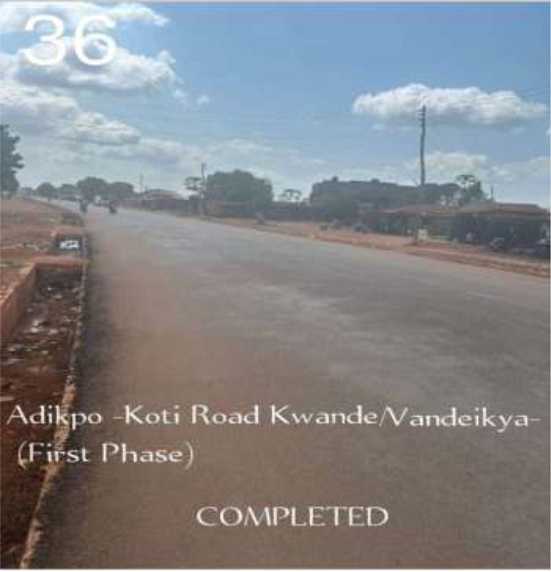
This is, no doubt, an account of responsible and outstanding State craftsmanship. But, what does it bode for Governor Alia’s aspirations for 2027?
2027: Alia’s aspirations and prospects
There is a major political development in Benue State which only those skilled or experienced enough in the interpretation of political signals or body language can understand. It is the heavy silence of Benue people about who they will vote or not vote for as their Governor in Benue State next year. The silence speaks volumes.

Just about a week ago, the Independent National Electoral Commission (INEC) announced the dates and schedule of activities for next year’s general elections, including the Governorship. That event was the official proclamation, as required by law, of the commencement of activities leading to the elections. In previous election cycles Benue people never waited for this event before saturating the public space with loud complaints about their dissatisfaction with the sitting Governor and their resolve to vote him out. Usually, such unsolicited campaigns for the opposition were led by civil servants, teachers and pensioners who were owed months of salary and accumulated pension and gratuity arrears. Remember Benue’s alias as The Civil Service State? The appellation derived from the fact that most of the salaried workers in the mainly agrarian state belong in this category and most of the rural folks who constitute the bulk of the electorate depend on them for regular financial support, ‘news from above’ and advice on whom to vote for. That was why Governor Alia’s predecessors who took their welfare for granted, especially non-payment of salaries and pensions, faced stiff opposition during their reelection bids, usually winning by the skin of their teeth, after last-minute appeasements or manoeuverings.
Governor Alia is most likely to avoid that harrowing electoral experience. The loud sound of silence pervading the Benue political environment in the build-up to the 2027 Governorship election is an indication that something different and positive has happened. It is a signal that Benue State civil servants and pensioners are happy with Governor Alia who has regularised the payment of their salaries and pensions, enabling them to feed their families and plan their expenditures and life – and the good ‘news from above’ has obviously been filtering down to the electorate.
But the civil servants are not the only happy people of Benue State who are spreading the good news of Father Alia’s people-centred, result-oriented and accountable governance. Commercial vehicle drivers, keke NAPEP (Tricycle) and motorcycle operators and commuters in Makurdi are full of praises for the Governor for the quality and network of roads he has provided in the state capital that have enabled them extend to and enjoy transport services in hitherto inaccessible locations as well as reduce vehicle breakdowns and maintenance cost. The solar-powered street lights in the state capital have enabled transporters to extend their services far into the night, serving operators and patrons of night business service providers like clubs, restaurants, etc. ‘This Governor has tried’ Terkura, a Makurdi-based commercial motorcyclist, remarked after picking up a passenger on the newly constructed road from Owner-Occupier Extension to Aihye. ‘If only you saw how bad this road was before now, hmm.’
Most provision store owners, petty traders and the average housewife in Makurdi are also reaping benefits of Governor Alia’s business and people-friendly government. He has flooded the state capital with the bread and table water produced by the Benue Investment and Property Company (BIPC), now nick-named ‘Alia Bread’ and ‘Alia Water.’ There is hardly any bread and table water seller in Makurdi that doesn’t stock these basic and nutritious food items. For some petty traders, these are the only wares they trade in – which means employment and income – as the items move very fast because of their affordable prices in spite of their highly competitive qualities.
These and other dividends of Governor Alia’s life-changing leadership style which cut across class, religion, ethnicity, and party lines continue to attract praise. “For the first time in years, governance feels inclusive,” said a community leader, Mrs. Dorcas Nyam, from Otukpo. “People who never had a voice before are now involved in shaping the future of Benue.”
“The facts speak for themselves. Projects are visible, lives are being changed, and the people are with him,” said Emmanuel Idoko, a political analyst in Makurdi. “Unless a miracle happens, Alia’s re-election in 2027 is not just likely, it’s inevitable.”
The good news of the better life which Governor Alia has introduced to residents of the Benue State capital is rapidly getting down to other parts of the state, including the rural areas, not as mere stories or the usual politics-speak. The new lease of life in the state capital is spreading in real terms in form of roads, health, water, educational, agricultural, electricity, and other facilities and opportunities that are rapidly finding their way to all corners of the state.
The story of Governor Alia’s transformation of Benue’s development landscape has also spread far and wide beyond the state, attracting recognitions and awards by reputable organizations, including the Leadership Newspaper’s “Governor of the Year” given on March 5, 2024 and the North-Central Governor of the Year in Digital Economy in 2024 and 2025. Governor Hyacinth Alia’s frugal management of resources has earned Benue State the number one spot on BudgIT’s Q3 2025 SFTL ranking of States in Nigeria for the first time in decades. The World Bank Support Programme Initiative in Nigeria 2025, has since produced credible evidence to attest to this ranking.
The Governor’s outstanding performances have also caught the attention of no less a personality than the President of the Federal Republic, Bola Ahmed Tinubu who dispatched his spokesman, Mr. Bayo Onanuga, a reputable veteran journalist and publisher confirm the veracity of what he was hearing. At the end of his visit on Friday, 29th August, 2025, the presidential spokesman said he had attested to an impactful legacy that has positively touched lives, transformed institutions and pulled Benue State from the brinks of total collapse it was in before Governor Alia assumed duty. Onanuga said rallying around the Governor was not just a call for political support, but a collective push for the continued delivery of the dividends of democracy that have already begun to transform the state.

Chief Francis Alochu
Founder, Alochu Foundation
He expressed profound satisfaction with the tangible progress on the ground, insisting that the visit served as a crucial fact-finding mission that directly counter the often-malicious and unfounded claims made by political detractors, about the Governor’s administration.
Off course, political detractors are everywhere. In a political environment where practitioners prioritize selfishness over public good and people’s welfare; where political ambition overshadows everything else; and where the opposition sees nothing beyond the craze for power, outstanding performances such as Governor Alia has recorded so far become anathema. In spite of Alia’s impressive governance scorecard, there are politicians who would go to any length to stop him in 2027 for various reasons: for him not to outshine them; to prove they are his political boss; to actualize their own political ambitions, to try and blackmail him, etc. All of them will surely be on the prowl to hit Alia as we match towards 2027. The good news, however, is that the people of Benue State, who are experiencing dividends of good governance for the first time in many decades; who are the ultimate owners of the gubernatorial mandate, are behind Alia. But that is not all.
Many other factors are also working in his favour. One of them is that he is getting more politically exposed and entrenched. After getting the nod of the national leadership of his party, APC, the Governor is building it into a strong and united election-winning machine by bringing together all tendencies in the party who believe in the emerging governance and political dispensation in the state. He has consolidated control over the party in the state, with the new party leadership, headed by Chief Benjamin Omale, firmly aligned with him.
Also, Governor Alia and his Deputy, Dr. Sam Ode, has struck a harmonious relationship, unlike in many other states, now and in the past, where the relationship between Governors and their Deputies is like that of cat and mouse. The Governor has since announced publicly that he would retain Dr. Ode as his Deputy in 2027. “There is no vacancy for any Deputy Governor in 2027,” he declared. “I have a Deputy Governor who understands governance, who is people-oriented. He is always with the people and for the people, and he is one who is very cerebral. For anyone thinking otherwise, I do not know, but my Deputy is very capable. He has all the capacity it takes to perform his functions, and he understands what is good for Benue, and that is what he is doing exactly. So, if anybody is eating and dreaming, there is no vacancy. I love him, I enjoy working with him. I enjoy a personal relationship.”
Recently the Governor brought a refreshing novelty into Benue politics by appointing political ‘Pointmen’ as his coordinators for all the 23 Local Government Areas in the state. Their primary assignment is to oversee APC affairs at the local level and work towards reinforcing the party’s presence and influence in their respective areas. They are mandated to act as worthy representatives of both the party and the Alia administration by intensifying efforts to attract new members and strengthen party unity across the state.
The Pointmen are expected to complement the legwork of the various support groups sponsored by the party and other individuals who have aligned themselves with Governor Alia’s new strategic vision for Benue State as well as his governance principles and style. One of such groups is the Divine Consensus 4 Alia 2027, a dedicated support group formed by the Benue APC to drive the Governor’s re-election campaign. Another formidable support group is the Alochu Foundation Support Group for President Tinubu and Governor Alia.
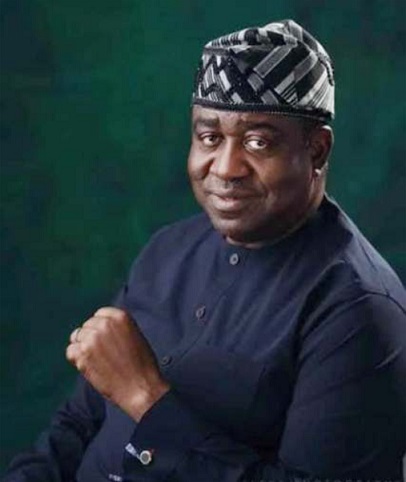
Sen. Gabriel Suswam
Former Benue State Governor
The Alochu Foundation, founded by Igede-born business mogul, Chief Francis AlochuIkpobu, was inaugurated in January 2026 to campaign for president Tinubu and Governor Alia’s 2027 re-election. Through the foundation, Chief Alochu, who is regarded as an emerging political leader of Igede nation, has brought to the table formidable support from Oju and Obi Local Government Areas in view of his influence in the area across party lines. There are over a dozen other Alia support groups of different sizes across the state such as Alia/Hwande Support Groups 2027, Divine Mandate Angels (DMA), LIVITSAR Support Group, Mbangur Community Elites Coalition (MECOA), Alia/Tinubu Support Groups, Iorpev Support Group for Alia 2027, Alia Performing Musicians Organisation, Alia KekeNapep Group, Various Demographic/Regional Groups.
The support groups are expected to tap into the pool of the Governor’s supporters in the ‘Yes Fada’ movement whose base has been widely expanded to include the ordinary citizens who are now enjoying or looking to benefit from the unfolding new order of benign governance in the state under Alia’s leadership. Another source of strong support for Governor Alia’s reelection in 2027 is expected to come from his kinsmen and regional base in the form of Kunav people in Vandeikya Local Government Area who have publicly endorsed him for a second term. Chief Barnabas Gemade, former National Chairman of PDP who contested against Alia in the last APC primaries and several other governorship aspirants of different parties for the 2023 election have now lined up behind the Governor.
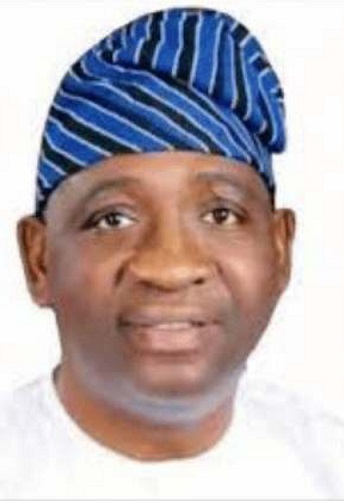
Bar, Sam Ode, Benue State Deputy Governor
The latest and, perhaps, one of the most significant factors working for the Governor’s re-election is the recent alliance he forged with Senator Gabriel Suswam. The partisan switch by the former State Governor who consistently served at the highest levels of politics and governance for over 26 years in PDP as a two-term House of Representatives member, two-term Governor, the Senator representing Benue North East (Governor Alia’s Senatorial District) and State PDP leader, for Alia, is like scoring the bull’s eye, politically. The new alliance is a strategic and fantastic game changer for both of them and APC. It means Governor Alia and APC will have the benefits of tapping from the combined political and governance experiences of two former Governors of the state in their fold – Akume and Suswam (should the former and Alia blend eventually).
Senator Suswam, who looks forward to returning to the Senate for the second time, brings to the table quite a large following deeply rooted both in the community and across the state. He has for decades maintained an enduring influence and commitment to his constituents. His tenure as Governor of Benue State and later as a senator showcased his dedication to balanced development, accessibility, and community engagement, areas in which his counsel will be invaluable to Governor Alia in resolving sour issues of inequitable distribution of strategic appointments complained of outside his Kunav community, especially in zone C.
Suswam’s capacity to connect with the electorate has earned him genuine affection from the people of Benue, making his recent decision to leave the PDP all the more significant.
The implications of Senator Suswam’s departure from the PDP are far-reaching and signals a potential consolidation of political power, which is going to reshape the forthcoming election dynamics with the APC fully set to gain traction and influence even in areas traditionally aligned with the PDP.
Suswam’s move to APC presents an opportunity for the party to bolster its membership and improve its electoral prospects in Benue State. His established political network and popularity could attract new members and sway undecided voters, making the APC a formidable competitor in future elections.
Governor Alia and Suswam have demonstrated deep commitment to the development of Benue, and their collaboration certainly advance Benue’s interest. The state APC chairman, Chief Benjamin Omale, has said that this strategic alignment would complement the transformative agenda of Governor Alia, reinforce support for the Renewed Hope Agenda of President Bola Ahmed Tinubu, and strengthen APC’s commitment to unity, development, and responsible governance in Benue State.
With all the odds in his favour and backed by historical antecedents, the reelection of Governor Alia in 2027 could already be regarded a fait accompli irrespective of any political party he may choose to contest on. No elected Governor of Benue State, since the current Democratic dispensation began in 1999, has failed to win re-election in spite of the strength of the opposition and in spite of poor performance. Even Governor Samuel Ortom who switched parties on the eve of the 2019 election because of irreconcilable differences with his erstwhile mentor, Senator Akume, won a second term. Analysts say, with that history in mind, a strong performer like Governor Alia who is greatly loved by the Benue people should and would not have much difficulty winning back his seat at Benue State Government House in 2027 on any political party of his choice. And that it would take an upset of epic magnitude to achieve a contrary outcome in the 2027 gubernatorial election in the state. That and the aforementioned favourable factors are what has given rise to emotional slogans and predictions such as ‘No Alia, no Benue,’ ‘Alia is unstoppable,’ ‘Alia’s victory in 2027 is inevitable,’ ‘Alia is indispensable,’ etc. And just like in 2023, it is predicted that many other political aspirants or candidates who align with Governor Alia would likely leverage on the “YES Father” mantra to win their elections in 2027.
They may just be spot on.